Monday, May 31

More Law or More Ingenuity?

The Iowa City city council is considering a more restrictive aggressive solicitation ordinance that would keep panhandlers and street musicians at least 15 feet from each other, would limit the area within the Ped Mall to something like a putting green on a miniature golf course for them to ask for help, and disallows the use of obscene language on solicitation signs. In asking the city council to reconsider the need for the more restrictive ordinance at their last meeting, I asked the members to look at current data to drive their decision, as they typically do when considering fiduciary matters. By a couple of the city council members’ own accounts they have been given no data that indicates any arrests or citations have occurred since the original aggressive solicitation ordinance was put in place over six months ago. That ordinance already prevents panhandlers from being within ten feet of store entrances and exits, fifteen feet from crosswalks, and twenty feet from ATMs, among other things.

Given as reasons to support the new ordinance is the request coming from the Downtown Association that there have been complaints by customers concerning some of the panhandlers bothering their customers and the effect is this hurts DTA businesses. Not to second guess the council or the DTA, but if there is a "problem" with aggressive panhandlers and street musicians on the Ped Mall, why aren't current laws being enforced?

The goal the City seems to be leaning toward is the systematic eradication of (or vastly limiting Ped Mall access to) those seen as "undesirable" by the business/real estate owners and others, whether they are acting in accordance with the current law or not. If the “data” that is driving their decision are the potential dollars and cents that businesses feel would come from a Disney-like public center, they should be straight forward and say so. If that is the intent, I’d go so far as suggesting that the City sell the Ped Mall to a real estate developer who could then privatize the space formally. At least then the real costs of doing business would not fall on the taxpayers.

As far as the notion that downtown is somehow unsafe? Why send the message to be afraid of downtown or the people in it. There is an old adage that works: “there is safety in numbers.” To ensure the numbers of people that are needed to support local businesses, incentive is needed to keep locals and out-of-towners discovering the specialness of downtown Iowa City. Look at what already brings people downtown: Friday night music, Saturday and Sunday night movies, art walks, theater, and festivals are all crowd pleasers. Why not work smarter to harness the power of individual creativity and community resources to convince any doubting Thomases that our downtown has a lot to offer and to support? Bring in a crowd and you won’t have to worry about a relatively small number of people.

To be clear, every businessperson is looking for a way to boost their bottom-line and that is her or his individual right. Panhandlers and business people probably at least this in common; they both want to make a living. But, as long as the Ped Mall is a public commons, the rule of law should balance a private request with the public good. The Iowa City bottom-line, in this case, should be to leave well enough alone.

Garry Klein is a member of FAIR! and Citizens for Community Improvement

Reblog this post [with Zemanta]

Protest Press Conference Scheduled Tuesday

PRESS CONFERENCE: FREE SPEECH ON THE PED MALL
Iowa City, IA – On June 1, 2010, Iowa City Council will be considering a third reading to reduce the free speech zone of the Ped Mall to appease business interests that lobbied its members. We find this to be abhorrent to the 1st amendment Rights of all Iowa Citians and ask the City Council to reconsider passing this ordinance. On June 1st at 6:30 pm in front of City Hall, Citizens United for Free Speech will have a press conference to present our side of the story. Members of Iowa Citizen's for Community Improvement, the ACLU, the Bill of Right's Coordinating Committee, FAIR!, as well as street performers and fund-raisers for non-profit groups who will be affected by enacting a more rigorous "aggressive panhandling" ordinance will also be on hand.

As of the release of this notice, the current ordinance has not resulted in the citation or arrest of one person that it was intended to address. Our group is calling for a review of the enforcement of the current ordinance and asks the City Council to delay the last reading of the ordinance until more facts that would justify the action are presented by those who desire the law changed. We will share our survey results (see: http://www.surveymonkey.com/s/J6LHR7G) that shows few Iowa City residents or visitors find the Ped Mall to be a dangerous place or unappealing to visit and because the impact for any group seeking goodwill donations will be permanently impacted by the Council's decision, believe this is a "solution seeking a problem."

Last month, the Mayor of Seattle, Washington, Bill McGinn, noted about the aggressive panhandling bill that he vetoed and his City Council backed up, "Although being asked for money on the street can be uncomfortable, it isn't illegal and the Supreme Court has said repeatedly that this is protected speech." He also noted his concern that the law would be leveraged unfairly against those who were perceived to be a threat. We share his concerns.


Reblog this post [with Zemanta]

Wednesday, May 26

What Do You Think?

I have posted many articles about the Iowa City Council and the Ped Mall, but what do people really think about Iowa City's Downtown? Take this short Click here to take survey.

Council's Stance Far from Middle of the Road

As the Iowa City Council gathers to decide whether to make an aggressive panhandling ordinance more rigid, a couple of different thoughts have solidified in my mind. 1) This ordinance radically changes who can speak and gather on the Ped Mall 2) How law enforcement officers will be challenged to fairly enforce the law.

The panhandling ordinance has the chilling effect of lumping all "panhandlers" under one law--that is a street person, a musician, a person seeking support for cancer research, or a political group seeking financial support for an issue are all painted with the same brush. The City Attorney's office say they have no choice, it is a matter of treating everyone as equal under the 1st Amendment. The only thing is, the law leaves out a very important group in this scenario, business owners. By in fact saying that we are doing this to protect our "fragile" business district, this is giving more importance to this group of people's free speech rights than others in the public.

In essence, the public space that is being limited to accommodate business interests is infringing on the civil liberties of all kinds of people from street beggars to Girl Scouts. This is a radical notion. And while the city council sees their action as, middle of the road, balancing the rights of business people and the public interest, they have made the middle of the Ped Mall a free speech zone that does not invite free speech and is likely to create a larger problem than it solves.

All laws come down to enforcement. If the Iowa City Police Department is using its resources to make arrests, it will make them based on who does the reporting. In other words is anyone going to call the police because a Girl Scout is selling her cookies on the Ped Mall? Not too likely. However if the law is enforced only with those people that produce an "yuck" response for others, does the end justify the means? Laws are supposed to create equity, not arm the constabulary in putting people away with whom others label as unsavory to the eye or holding views that are different than their own.

The argument I have made is that the current law works or doesn't work based on who is making the call and who is enforcing it. If people are concerned their businesses suffer from panhandlers, make the call to the police. At least then we'd know that the law was being applied. Currently we know the law is not being used as is shown by the lack of citations. Or maybe common sense is prevailing. Maybe, law or no law, people are are communicating that they are bothered by others' actions and common decency and courtesy are working?

In investigating this issue, I found it really interesting talking to people who do panhandle. They don't want to be a bother and are horrified by those who they see as violating a code of ethics. I think that most people want to live and let live until it comes to their own livelihoods. I truly think that panhandlers and store owners are not that far apart in their desires, they have a difference of opinion of what are fair business practices.

Thursday, May 20

Who'd a Thunk It? Financial Security from Health Carer Reform

The following information comes from Bill Hawthorne, Public Outreach Assistant at the Mesothelioma and Asbestos Awareness Center. If you know anyone who has been affected by Mesothelioma, it is very expensive to afford the treatment because research has not found a cure for this type of cancer. My thanks to Bill and his organization.

Health Care Reform Will Help Everybody

Many Americans assume the new health care reform act will benefit mostly the poor and uninsured and hurt everyone else, according to polls. As Matt Yglesias wrote, “Basically, people see this as a bill that will take resources from people who have health insurance and give it to people who don’t have health insurance.” Those who still oppose the reform say that people ought to pay for their own health care.

We all believe in the virtues of hard work and self-reliance, but these days it’s a fantasy to think that anyone but the mega-wealthy will not, sooner or later, depend on help from others to pay medical bills. And that’s true no matter how hard you work, how much you love America, or how diligently you take care of yourself. The cost of medical care has so skyrocketed that breaking an arm or leg could cost as much as a new car. And if you get cancer or heart disease — which can happen even to people who live healthy lifestyles — forget about it. The disease will not only clean you out; it will leave a whopping debt for your survivors to pay.

And the truth is, we all pay for other peoples’ health care whether we know it or not. When people can’t pay their medical bills, the cost of their health care gets added to everyone else’s bills and insurance premiums. When poor people use emergency rooms as a doctor of last resort, their care is not “free.” You pay for it.

Another common fantasy about medical care is that the “free market” provides incentives for medical companies to develop innovative new drugs and treatments for disease without government subsidy. It’s true that private enterprise is very good at developing profitable health care products. But not all medical care can be made profitable.

For years, the U.S. government has been funding medical research that the big private companies don’t want to do because there is too much cost for the potential profit. This is especially true for diseases that are rare and expensive to treat. An example of a recent advance made possible by government grants include new guidelines for malignant pleural mesothelioma treatment developed by Memorial Sloan-Kettering mesothelioma researchers. Another is a blood screening test for mesothelioma developed by thoracic surgeon Dr. Harvey Pass. The health reform act provides for more dollars for such research, from which even many of the tea party protesters will benefit.

The biggest fantasy of all was that people who had insurance didn’t have to worry about health care costs. But the fact is that in recent years millions of Americans have been bankrupted by medical costs, and three-quarters of the medically bankrupt had health insurance. And yes, insurance companies even dumped hard-working, law-abiding patriots. But the health care reform act will put an end to that, and now America’s hard-working, law-abiding patriots are more financially secure, whether they like it or not.

Wednesday, May 19

Transcript from 5/10 Panhandling Discussion

Below is the transcription from the 5/10 Iowa City Council meeting which included a second consideration of an "aggressive solicitation" ordinance modification, the details of which can be found here.

ITEM 18. CONSIDER AN ORDINANCE AMENDING TITLE 8, ENTITLED "POLICE REGULATIONS," CHAPTER 5, ENTITLED "MISCELLANEOUS OFFENSES," SECTION 2, ENTITLED "AGGRESSIVE PANHANDLING," TO PROHIBIT SOLICITING FOR MONEY IN LIMITED AREAS IN THE DOWNTOWN. (SECOND CONSIDERATION)
Hayek: This is second consideration, and staff has requested expedited action.
Bailey: Move second consideration.
Wright: Second.
Hayek: Moved by Bailey, seconded by Wright. Discussion? We clearly have some members of the public here, so…sign in or…or put your name on a sticker and put it on the, uh, book please, and state your name and…address us.
Klein: Uh, good evening again, Garry Klein again, and still at 628 2nd Avenue, as far as I know.
Hayek: And, Garry, I’m sorry to interrupt you. I’m going to ask that people limit their comments to three minutes tonight. Based on the late hour, and the number of people who apparently need to address us. (both talking) Just so everyone can get…
Klein: May I ask the Mayor if…if I run out at three minutes, can I come back for another three? Cause I know this is more than three minutes. I timed it.
Hayek: Yeah.
Klein: I was timing for five, but three I…
Hayek: We’ll play it by ear.
Klein: Okay. Okay, so uh, I…first of all, I wanted to thank everyone behind me for coming. I was surprised. This…when I sent you a letter, I understood I was the first correspondence that the City Council had heard from about this, uh, about this issue, other than the…the person who spoke at the last meeting. So when I sent that letter, uh, I did for three specific reasons. One, I wondered if this is an overkill measure, given my understanding that exactly zero, uh, aggressive panhandling citations have been issued, if I understood, uh, from the Council Members…I asked that question of…of that issue. So if we already have something that’s working, and we have three or four other ordinances that can be used if people get out of hand, why are we here tonight? Why are we here at this late hour? Um, secondly, as a person who’s been before this Council many times
_____________________________________________________________________________
on free speech issues, um, this further limitation of free speech, essentially putting people in the planters to keep them away from the entrances of businesses seems, again, to be, uh, not very promising given that these same folks may be our…our street musicians, as well as folks like student groups who are raising million…over a million dollars for things like, uh, dance marathon, as an example. Um, and finally, is this really fair to other businesses in downtown, I mean, we’re…we’re treating the ped mall as this very special place, where the rest of downtown has to kind of contend with the fallout when we keep making…making rule changes in that area. Um, so I can understand, given what I just heard about the, uh, from the money for block grant money why perhaps you haven’t heard from, uh, some of the non-profits and their issues. But I also…uh, I guess there are people, as you see behind me, who have a views…a viewpoint that differs from yours, or at least your first vote. So, I want you to think about the different between meaning well and acting well, because we all mean well. Everyone here means well, that’s why we’re here tonight. I think in making your first consideration you meant well…to make things better for the…for businesses on the ped mall. I understand there are issues. But for everybody I hear who says there’s a problem on the ped mall, I read something or see something on a community program that says, we love…here, can I give you a direct quote. This is from a…a tenant on the ped mall. Downtown is safe. I feel safe. Everybody watches out for each other. It’s not just a place to do business. It’s a place for friends to meet and to hangout. Well, a lot of people believe that, and that’s why they’re down there, and it’s not just about business, even for the business owners, apparently. I did contact the DTA to find out who are these people who said we need to do this now, and I was told, well, we’re not going to tell you, so I wonder, did they tell you? Uh, thirdly, um, you know, you have a Member on the Council who frankly may, in my estimation, at least have an ethical consideration in making a vote. Why? Because he has a business on the ped mall. Two he has, uh, in the past made statements about his feelings about panhandling, and how that affects his business. There’s an economic interest at play here. My concern then is that for fairness that…that that person really consider whether it’s through a moral compass or through a higher power, whether it’s appropriate to vote on this issue. Um, so…the last thing I’m going to say, and I’m going to move out and let other people talk, is that at the very least, you mention that this item is being asked to be expedited by staff. What I’m asking you to do is get more data, for crying out loud. If what I’m hearing here is zero people have been arrested on existing aggressive panhandling ordinance, why are we trying to make it harder? So having said that, I…my request to the Council is let’s separate these votes out. There may be more people who need to be heard from, including the Downtown Association. I’m…I’m not saying that I’m the arbiter of all things that are right about the City. I’m not saying that at all. I’m saying that there are people who are going to be affected, and it’s not just the…it’s not the usual suspects. And with that I’ll…I do want to, uh, give something to, uh, for you guys to look at. You may have seen this. It’s called preventing panhandling. There’s a lot of different ways we can approach this thing. It’s good information, and maybe we can try education over adjudication.
Hayek: Mr. Klein, for your information (applause) Mr. Klein, so that you and the others understand, there’s no present motion to consolidate the second and third readings of this item. The…the motion is to pass second consideration, which would still leave the third consideration for the next City Council meeting. (unable to hear person in audience)
Wright: Not tonight!
Hayek: Not tonight.
Fidelis: My name is Libris Fidelis, and of course I live downtown at Capitol House Apartments. Uh, I have made a previous correspondence, connection, uh, through the emails, uh, to the City Council, and I believe I spoke at one of the previous, uh, Council meetings, but I’m not sure if I did or not. The pending Iowa City ordinance concerning the allegations of panhandling, uh, is both labeled and prejudicially, uh, excessive in its effect upon denying basic United States’ civil and constitutional rights to a minority of this City’s impoverished citizens. In the four years that I have lived downtown in Capitol House Apartments, I have regularly, almost daily, made at least six or more round trips per week walking on the downtown sidewalks and right through the ped mall, which is now being labeled by the Sheraton Hotel as “City Plaza.” Those daily walks have been especially, going to the Wesley Center Free Lunch program on north Dubuque Street, and Capitol House Apartments, from Capitol House Apartments, uh, but also randomly I’ve been going to the Wedge for occasional breakfast, to the Iowa City Public Library, to the Bread Garden Market for groceries, to the Post Office, uh, to the Downtown Transit Center, to Old Capitol Mall and to various food establishments for meals. Never in my four years of walking downtown have I witnessed anything remotely resembling what is described in the proposed ordinance as aggressive behavior as the result of impoverished solicitations that have regularly been asking for charitable assistance from the public in presence. Yes, I have witnessed the very rare, occasional minor violent or threatening gang altercations in the ped mall area, but those are very rare, and has never involved impoverished solicitors who are regularly asking for charitable handout donations. There are two very serious civil rights denial issues that our City is attempting to press into, uh, ordinance. First is to deny the City, by City ordinance the right of certain minority citizens to be present in certain locations in our city. A second is to deny this, by City ordinance, the right of certain citizens to communicate their plight with the public, in the hope that some minor monetary aid will be forthcoming from an understanding and sympathetic public. Any restriction or denial of these two basic fundamental human and constitutional rights results in civic disqualification of citizenship rights upon a certain selected disadvantaged segment of our society. Such an act by ordinance if passed by Iowa City Council will be therefore a response to a perceived non-reality that the issue might concern public safety when directed to historically peaceful, impoverished solicitors. But rather, this is actually a personal vendetta by certain commercial
economic special interests, that originates from a dislike for seeing in the public presence the apparent low-income and non-income disadvantaged citizens who come to the central downtown area to solicit for generous but meager charitable assistance. The end result of this ordinance is, if approved, uh, by Iowa City Council, will be a prejudiced ordinance that is aimed at excluding citizenship on a particular segment of our society, just because of their personal appearance and activity to solicit charitable handouts in a typically peaceful manner. This committee, uh, Iowa City committee, uh, Iowa City Citizens Community Committee urges that this ordinance must be stopped now by a City Council vote against passage. It is both immoral and presents a caste making precedence for our city, which I believe will only result in a more probable civil rights lawsuit, which our City cannot win, and which will incur the wasted legal expenses thereto for our City to pay. Vote against this potentially tragic and defaming ordinance now. Thank you.
Hayek: Thank you. (applause)
Smithers: Uh, my name is David Smithers. I’m from…I live in Wellman, so I’m an ex-urban Iowa Citian. Um, I’ve lived and worked and went to school in…the greater Iowa City area for nearly 40 years. At least five of those years, mostly in the 70s, I lived in Iowa City itself. Uh, the downtown of Iowa City together with the University of Iowa campus is a historic and vital commons. Not only to Iowa City, but essentially to the world. We’re a UNESCO Literature City (mumbled) to Iowa and to the nation. The commons needs to be protected in order to protect the First Amendment rights of free speech and assembly. The commons has existed in downtown Iowa City, and the U of I campus, in conjunction with commerce and residential usage, for over 150 years. Uh, changes in commerce have induced…include an influx of federal dollars. The urban renewal that started in the mid-60s and just ended not too long ago. Uh, to the present day. It has also seen changes in transportation, and the nature of the pedestrian experience. Much commerce has fled to the…the malls and the big box stores for sure, where there exists cheap land and free parking. The congregation of people in such commercial areas has not been (mumbled) by any notion of commons though, and that is a very mixed bless…blessing indeed. Free parking is no substitute for free speech and free assembly. And that’s the reason for people like me, and other people, go to downtown Iowa City to…to mingle and to shop and to eat and get Library books and so on. And, yes, occasionally people, uh, protest down there, and some people ask for help. It is, uh, a vital dynamic for this city and it’s part of our history. Now a dark cloud is closing in…over us, and I’m not just talking about volcanic clouds from Iceland, that’s bringing down our cold rain. Post-911 America has witnessed increased laws of security, especially security of property. Human rights, including economic human rights, has taken hits, such as English-only laws here in Iowa, where place immigration, enforcement raids, restrictions to protect and sometimes, um, restrict free speech, something called free speech zones. That was mentioned not too long here…long ago here in Iowa City, uh, a few winters ago in Des Moines, uh…homeless people were cleared out of their heated hooches by the City of Des Moines, in the dead of winter, and now Iowa City with, afraid of its increased socio-economic and ethnic diversity has spewed forth with curfews and prohibitions on youth groups, uh, congregation..congregating, and now increasing restrictions on homeless people, among them neglected veterans, asking for help. Two thoughts come to my mind, well…two things bother me. Arizona immigration laws, and now this! Uh, Iowa City becoming more, progressive Iowa City becoming more intolerant. One word comes to my mind, I hate to say it: boycott.
Hayek: Thank you.
Clark: Excuse me (noise on mic). Good evening, Mayor, Council Members, my name is Sarah Clark and I live in the, uh, northside of town. Iowa City already has an ordinance in effect that, um, which outlaws aggressive solicitation. I would like to see some evidence that the current ordinance has not been effective. Why is there a push for further restrictions? It seems to me that these changes are being driven by one organization’s perception that downtown can only be rescued by further restricting certain persons and their activities. I’m in downtown Iowa City several, uh, several times a week, often to visit businesses within the ped mall zone. Not once have I felt threatened by someone panhandling…panhandling. Nor have I ever been directly approached by anyone asking me for money. What I have seen on a number of occasions are one or two individuals sitting quietly near the curb holding a small sign asking for a donation. Are these persons aggressive, in their panhandling? No, they are not. Have…how have they reacted, have they reacted in an aggressive or threatening way when I acknowledge them, but say that I cannot give them a contribution? No, they do not. These proposed changes to the ordinance have already created some unintended consequences as evidenced by a letter to the editor in today’s Press-Citizen from University of Iowa Dance Marathon organizers. Are you now going to amend the proposed ordinance changes to provide exceptions for non-profit organizations? You head down a slippery slope when you begin to differentiate between acceptable and unacceptable solicitors. I think these proposed changes are unworthy of the Iowa City I love. Rather than corral panhandlers into an even smaller area, wouldn’t it be more productive to provide information about local social services? One of the reasons I chose to move to Iowa City last year was because I knew it was not a ‘one flavor’ city where everyone looks and acts alike. The diversity of ped mall users, including panhandlers and solicitors from non-profit organizations contributes to the wonderful vitality that we enjoy in Iowa City. I believe the proposed ordinance would have a detrimental impact on that vitality, and I urge you to reject it. Thank you very much.
Hayek: Thank you. (applause)
Bennett: Hi, I’m Darcy Bennett, the Executive Business Director of Dance Marathon, and I’m just here to inform you on how the panhandling ordinance could go ahead and affect our organization, as well as other non-profit organizations. We are a
student-run philanthropy that raises funds for children with cancer, pediatric oncology patients and their families, treated at the University of Iowa Children’s Hospital. The money that we raise goes directly to the Hospital and the community surrounding it with the…area families who are treated here. For the last three years we have raised over a million dollars each year for pediatric cancer families and patients. With the money raised we provide financial, emotional, and social support to these families. There are many programs that have been implemented with this, including child life assistance, summer programs for oncology patients and their siblings, and hospital renovations. We also fund a lot of the small things, like a dinner every other Sunday night, and parking vouchers for hospital ramps that can really mean a lot to families who are staying in our hospital for weeks to months at a time. We recently donated $1 million actually to the University of Iowa College of Medicine to fund renovations to a research laboratory and to the establishment of a research fund. We work year-round to raise funds and awareness for pediatric cancer, and during the weekend in February, we celebrate the lives of those children who have passed before us, and who are here with us today, in a 24-hour event. In order for students to join our event, they are required to raise $400, and much of this money is raised from our downtown panhandling, as you may call it. In the past years we’ve raised up to $30,000 per year with this downtown panhandling, and even though that doesn’t sound like much to a million dollar organization, it really, truly is. In…to put it in perspective, uh, we spent $30,000 per year for holiday gift cards that are donated just to the families so they can go ahead and provide presents and different things for their children around the holidays. We understand the main objective of this ordinance, but it does pose problems for a non-profit organization, like ourselves, and many others. One of the fundraisers that we, as I have mentioned earlier, do is kind of called ‘canning’ where we ask dancers or student participants to ask for donations in the pedestrian mall from 11:00 PM to 2:00 AM. This opportunity allows students of any socio-economic status to raise funds for pediatric oncology, as well as continued participation in an educationally beneficial activity during the late-night and weekend hours. This new ordinance would greatly decrease the amount of participants allowed to fundraise in this manner. We normally would have 30 students out on one night and this may decrease down to 10 students on a particular night. And, many students in our organization really do rely on this source of fundraising, as many of our dancers, including myself, do not have wealthy family members who can go ahead and cut a check for $400 in order for them to participate in our event. For this reason it is really important that we do offer this opportunity to students to be able t supplement their own fundraising costs, and as necessary be able to raise the full amount through downtown ‘canning.’ Not only will this decrease our student participation, but it may also affect the amount of money we are able to give back to the Iowa City and University of Iowa community, as you’ve heard previously. We are constantly revising the ‘canning’ program to abide by City ordinances and the University of Iowa cash handling stipulations. We’ll be willing to make adjustments as you feel necessary to please the general public; however, if this is passed in the current format it could directly impact the amount of money we are able to raise in our downtown ‘canning’ program. So, as a result, we would just like to ask you to possibly think of a revision for this for non-profit organizations or I don’t know all of the stipulations behind everything, so just kind of consider us when you’re thinking about passing this ordinance. And I would like to thank you for your time and just ask you to consider us, as well as the pediatric families and patients.
Hayek: Thank you. (applause)
Fiegen: Mr. Mayor, Members of the Council, my name again is Tom Feegan from greater Iowa City. Given the late hour, let me be brief. I have two concerns about your ordinance. The first relates to the First Amendment. We have an inalienable right to freedom of speech and freedom of assembly, and it appears to me that this ordinance, including the tightening of the panhandling, is a abridgement of that right. The second is, the ped mall in our fine city is a unique public space. One of the prior speakers referred to it as a ‘commons.’ And, it is that, and it offers to all of us, all citizens of Iowa, all visitors to Iowa City, a unique patchwork that includes people that may be offensive to some of us, that may be different than all of us, but they are part of Iowa. They are part of Iowa City, and this ordinance in essence seeks to push them into the shadows, because there may be some inconvenience. There may be some uncomfortableness, and I would say to you as the elected representatives of this city and this patchwork quilt that you do not pass the second reading of this ordinance, and you do not shunt these people who are human beings into the dark corners of Iowa City, but allow them to be part of the patchwork that is our ped mall, that is our downtown. Thank you. (applause)
Hayek: Anyone else wishing to address the Council? Briefly, Garry!
Klein: It will be very brief. I…I wanted to offer…I was about to say a fig leaf, but that would be inappropriate. A, uh, a…olive branch! That’s what I was looking for (laughter). I don’t know biblical stuff; I get confused (laughter). Uh…but, one of the things that I did pay attention to is, you know, I look at things that have been successful in our city. One of the things that has been successful for the DTA has been the shop, or..and actually the Chamber of Commerce as well, is the shop local or the 350 programs, and I got to thinking, if…if we really believe that our social services could be better served by educating the public, and…and I really mean that. By having posters, having flyers, having information on the DTA’s web site, you know, because we, let’s face it, panhandlers are some of the most web literate people I know, and uh, and so it’s about where are…where are resources available. So, part of it is not to…I’m not a…I don’t want to be in the business of shutting people up, so much as I want to be in the business of helping them have better information, make decisions, and I know given, uh, a lot of things that were said tonight, and things you’ve been working on tonight, you like to…you like to have data to drive your decisions. As I said earlier, I feel in this particular case the data isn’t helping you here. It’s the anecdotal information that seems to be driving the decision. I think we would all feel better, uh, if this decision was based on fact rather than, uh, observation. So with that, again, I…I ask, I, like everyone else, I would love for you to change your minds and vote against, uh, this particular ordinance so that we don’t need a third reading, but if, you know, if…if you feel the need to have more people come visit you, I suppose we could do that! So, thanks so much!
Hayek: Thank you, Garry. Council?
Dickens: I could recuse myself, but I…I have a real hard time doing that. I…I’m downtown all the time. Some of you people come downtown occasionally. I’m there 330 days a year. I do get some Sundays off, um…I was, uh, I was…had an aggressive panhandler just come up to me last week. I was heading down to pick up my packet a week ago Thursday, and he would not back off. And finally I said, I’m on my way to the City Hall, if you want to follow me down, you’re more than welcome. So there is still some aggressive panhandling going on. Um, I see it all the time. I will recuse myself from voting on this, but I will not remain silent on it, because I live and breathe it every day and our customers, and non-customers, people that are just downtown, will come in our store to get away from some people, because they are still very aggressive. I would say overall it’s gotten a lot better. And I think it has, and those people sitting down, I know most of those people. I say ‘hi’ to them every day. I don’t have a problem with those. It’s still the aggressive, and they’re not…they’re not giving up. And, that’s the only reason…I will not vote on this, but I will not remain silent.
Dilkes: Let me just say one thing with respect to…to this, um…if I had thought that Mr. Dickens had a legally compelled conflict of interest I would have advised him as much. Um, I…I don’t. Um, clearly the decision to recuse himself though is his.
Wright: Terry, if I could just…step in. The aggressive panhandling already is illegal, um, what we’re talking about here is further restrictions, and that’s where I really start having a big problem with this ordinance. Um, for a bunch of reasons, uh, and I’ll probably rehash to a certain extent what I’ve said before, but we’re focusing first of all a group of people that’s essentially powerless. Uh, they have no economic clout of this community. They’re down on the street asking for money. That’s really not a fun way to make a living. I’ve talked with some of these folks. I know what kind of abuse they take. Uh, and the aggressive incident you spoke about is already illegal under our existing ordinance. Um, furthermore, I feel this is just a, yet one more whack against First Amendment rights to free speech. Panhandling is protected speech in the United States. Uh, I think the…unfortunate thing that we’re facing here…is that very frequently panhandlers are not well dressed. They don’t have good haircuts. They’re coats are dirty. They make us feel uncomfortable, and I think that’s what we’re really talking about here. It’s not a matter of safety downtown from the panhandlers. Uh, I…I said it the last time and I…I still agree with it this time, I find the…I’m sure the intentions behind this ordinance were good, but I think its overall affect is still mean-spirited and small-minded and the Council should be embarrassed that we’re even talking about it.
Hayek: I, um…I have legal training. I take First Amendment issues very seriously, um, our City Attorney’s office, which has…approved this, um, ordinance, uh, takes First Amendment issues very seriously, as well. In my estimation, um, this is both constitutional and reasonable. It allows solicitation to continue, uh, in the downtown area. Um, I am…I’m not interested in exceptions. I think that is a slippery slope. We cannot say that certain people can be within an area and others, uh, cannot as it relates to this ordinance. And that will impact toward the non-profits. Um, you will still be able to solicit, uh, in the designated areas within the entire city plaza, um, so based on that, I will continue to support this. But I…I appreciate the views of those who feel very strongly about this, and uh, I’m glad you showed up tonight, and I’m glad that the City Council will, uh, follow its tradition of…of making sure we have ample opportunity for public input on a very important issue.
Wilburn: The only piece that I would, uh, add, or highlight, is that um, as you had said, Mr. Mayor, it still allows, um, panhandling in that strip within the middle of the ped mall, so, but there is some reduction, um, and that piece that I added last time was that…aspect that we have in terms of balancing, um, balancing rights, and that’s between, um, the businesses and the individuals that have come forward, uh, with concerns, um, about aggressive panhandling to help try and provide some type of (mumbled) in terms of ease…um, ease of clarifying where…where it cannot occur in the pedestrian mall. Um, that’s the only piece that I would add.
Hayek: No further discussion?
Bailey: Well, the commons requires a balancing act and we’re fortunate that we still have a commons in downtown Iowa City. Many cities have turned their pedestrian plazas or the city plaza that is legally and technically called, they’ve turned them back into vehicular traffic. I was just reading today about, I think it was Sacramento, has gone back to vehicular traffic in their pedestrian plaza. Um, and what I’m seeing in our downtown, which concerns me, um, because I love our downtown, is a fragile economic environment right now. We are fortunate to have so many local businesses down there, and that balancing act between people who want customers coming in their business and feeling comfortable…I always feel comfortable downtown. I’ve never been downtown where I haven’t felt comfortable, but I also have, you know, parents in town who don’t feel comfortable coming downtown, and I understand their perspective. Some of it is, oh, people don’t look like us and they look a little different, and I get that, and I can, you know, say Mom, come on, but I don’t want them to feel unsafe, and I understand that important balancing act with this. There’s still an area that’s designated. It’s still balancing rights, and it’s balancing issues. I’m glad to hear from everybody tonight who’s concerned about our community, because that’s what it takes to build community, and I know that many of you think I’m wrong, but I am going to continue to support this, in support of our wonderful locally owned businesses downtown in this very challenging and difficult economic time.
Wilburn: And there is the education…I forgot there is the education component related to this, involving the parking meters, which I think everyone does support, and those resources will go to some of the, uh, non-profits that are working with, uh, providing support for some individuals, and uh, and I do agree with (mumbled) no exceptions.
Hayek: Anything further? Roll call, please. Item passes 4-1, Dickens abstaining.
_____________________________________________________________________________

Wednesday, May 12

Manhandlers or Panhandlers?

As the Iowa City Council will have one more vote on the extended panhandling ordinance tentatively on June 1st. Fair-minded people should ask: which is more dangerous, a panhandler with a sign or a city council that can't be swayed from a decision that they clearly do not have evidence to support the need of? The violations of the current aggressive panhandling ordinance has been numbered at zero--ZERO. This is governance of the worst sort: a solution seeking a problem.

Thankfully there are others in the Iowa City Community who share this concern and continue to organize around defeating the proposition.

If you are a resident of Iowa City or a visitor who has been on the Ped Mall, drop a note to the city council, if you share the concern that the city government is over-stepping it's bounds. Further, write a letter to the local papers and show up at the meeting. Let the government know that Iowa City is for everybody.

Reblog this post [with Zemanta]

Tuesday, May 11

Editorial: Iowa City Peddling Business in the Ped Mall

I attended last night's City Council meeting and it brought out a new understanding of how Iowa City's "diverse" downtown commercial interests are ruling the roost in Iowa City. In discussing the second reading of a more stringent ordinance to limit panhandling on the Ped Mall, the majority of city council members pooh-poohed 1st amendment concerns in supporting the ordinance, the current version of which has yielded zero citations or arrests by Iowa City's Police Department. An ordinance which has resulted in council member and Ped Mall business owner, Terry Dickens in saying "things have gotten much better".

However, in the effort to continue aesthetically purifying the Ped Mall, the city council continued to support this measure to save "fragile businesses" in Iowa City, in the words of Regenia Bailey from people who are scary to their customers. And yet, DTA members also tout how safe downtown is and kid-friendly, as they did on a recent community program. Apparently taking the tack, the business of city government is business, the council voted 4 to 1 with Dickens "abstaining," Connie Champion going home sick, and Mike Wright reconfirming his vote in the negative.

In my call to make a more data driven decision, the council elected to vote with the DTA, which will not release the vote they took of their membership to push for additional restrictive measures on the public space or "commons" as David Smithers referred to them in his call for the council to reject this measure. This type of blind obedience would be par for the course several years ago, but with at least three self-described progressives on the council, it defies logic.

This defies logic in that the Ped Mall itself is a public space that has been developed as a for-profit center by the city in cooperation with business owners. By continually allowing businesses to sprawl out into the walkway area and permitting food carts, the overall effect is to limit the walking area. In so doing, the city and the businesses have, in part, been responsible for the environment they are now convinced needs to be changed.

Despite the efforts of several people, including US Senatorial candidate Tom Fiegan, the city council, members of ICCI, student organization members from the University of Iowa, the council chose to ignore the unwashed masses to dance with the ones who brung 'em. Oddly they were able to ignore the charge that other downtown businesses are equally challenged and that a likely outcome of this ordinance is to send panhandlers to other areas of the city where they are less likely to be hassled.

However all is not lost, the third and final vote will take place at the next scheduled formal council meeting which is June 1. This allows those who have been sitting on the sidelines to jump into the fray and contact their city representatives with their comments and to show up at the final vote to stand and be counted. By creating a solution in search of a problem, the city will likely get what they are saying they want to avoid--a downtown devoid of vibrancy.

Reblog this post [with Zemanta]

Monday, May 10

A Dickens of a City Council Meeting in Iowa City Tonight

The issue of what to do about panhandling and other annoyances on the Ped Mall in Iowa City will likely to come to a head tonight with a group of ICCI and FAIR! members asking the city council to delay a vote on the issue citing a lack of data to make the decision. Council member Terry Dickens has largely led the charge for the Downtown Assocation (DTA) to make panhandlers, musicians and others to stay 20 feet away from store fronts on the Ped Mall and 10 feet everywhere else in Iowa City.

There are numerous considerations on this issue:

- Does this significantly reduce free speech and right to assembly?
- Is the city essentially "selling off" public property to unfairly advantage a group of business people in a particular area of town?
- Is this fair to other downtown businesses?
- Is a council member using his vote in direct conflict of interest to his office?

Hear Mr. Dickens own words on this issue. He "pays dearly" for his store's corner location and for having panhandlers who are near his store who also recognize it's prime location value. Is his profit motive clouding his judgment?


People who wish to speak to this issue should plan to arrive at 6:45 pm for the council meeting which begins at 7 pm at Iowa City Hall at 200 Washington St. The agenda item is #18 and a second and third consideration will likely be voted on this evening, unless the council is compelled to await further input.

Sunday, April 25

Who Is the Party of the MOTR?

It appears from the conversations and so on that I've had with people who attended the Democratic and Republican Party district conventions that some didn't feel very well respected. Been there, done that. Political parties by their natures are fairly incestuous and are not really looking for new ideas, but rather new ways to sell the ideas they already have.

Let's talk about you and me. Most people are not party joiners, though we tend to affiliate to one or the other of the D or R parties at least once every few years. Every election we are told is decided by the "middle." And for this reason I would argue it is this way because the middle doesn't have a party of our own; hence the other two prevail.

Anyone who has tried to join one of these parties soon comes to realize that it is hard to accomplish substantial movement. Why? Because the parties' hierarchy know what has worked for them and, frankly, both major parties are arch conservatives when it comes to moving away from their sacred cows.

So why not just join an established third party? Once again, the doctrine is drawn. As John Mellencamp, Malcolm X, and Alexander Hamilton all sort of said, "If you don't stand for something, you'll fall for anything." All parties stand for something, but none stand for what most people think is right. Hence we are a nation of flip-floppers who go back and forth generally between D's and R's.

Early in our nation's heritage, choosing between two was quite a step up from Monarchy. However, I think that many people agree that neither party really represents what main street or the mainstream think. In fact each party claims to feel our pain, but in reality, they are counting up our votes.

So why not join the Tea Party? Well, who is the Tea Party and do they represent mainstream values? According to the Tea Part Patriots' website they stand for:


Fiscal Responsibility: Fiscal Responsibility by government honors and respects the freedom of the individual to spend the money that is the fruit of their own labor. A constitutionally limited government, designed to protect the blessings of liberty, must be fiscally responsible or it must subject its citizenry to high levels of taxation that unjustly restrict the liberty our Constitution was designed to protect. Such runaway deficit spending as we now see in Washington D.C. compels us to take action as the increasing national debt is a grave threat to our national sovereignty and the personal and economic liberty of future generations.

Constitutionally Limited Government: We, the members of The Tea Party Patriots, are inspired by our founding documents and regard the Constitution of the United States to be the supreme law of the land. We believe that it is possible to know the original intent of the government our founders set forth, and stand in support of that intent. Like the founders, we support states' rights for those powers not expressly stated in the Constitution. As the government is of the people, by the people and for the people, in all other matters we support the personal liberty of the individual, within the rule of law.

Free Markets: A free market is the economic consequence of personal liberty. The founders believed that personal and economic freedom were indivisible, as do we. Our current government's interference distorts the free market and inhibits the pursuit of individual and economic liberty. Therefore, we support a return to the free market principles on which this nation was founded and oppose government intervention into the operations of private business.

Up to point number three, I could get behind those principles. In fact, taken with point number two, we really can't have a free market. Why, because the Constitution tells us we need taxes and those taxes are haggled over by those whom we elect. A so-called free market can't exist as long as we ask people to pony up money to have a government do things for us.

So, no Tea Party for me, and I doubt for many folks who are happy to have trash pickups, clean water, aid to families with dependent children, social security, etc. Also for those who aren't willing to lose arms and legs working in uncontrolled manufacturing plants and don't pay a living wage.

So what would the Middle of the Road Party look like? Beats the heck out of me. We haven't had our convention, chosen our leaders, or created our platform. There is not a party and so the climb is long and the odds are against us.

If I were to venture a guess, the MOTR party would place the future of kids at the forefront. It would tend to be hopeful, but cautious in what this country does both here and abroad. It would insist that rules were enforced, but the rules were fair in the first place. It would be a party that celebrates pragmatism--where some change would come fast and others a little at a time. It would not seek to win by putting the other parties down, but to win by articulating the things that people believe are in the best interest of the country, even if they aren't always in the immediate best interest to themselves. Yes, it would uphold the Constitution. And, of course, it would be fiscally responsible.

I also believe it would be hard to build. It would ask people to disengage from the politics they understand to be how things are done and engage in conversations with people in a way that doesn't make me right and you wrong. It would put us in a whole new place. It would be a bold venture to be sure.

Reblog this post [with Zemanta]

Friday, April 16

Corporate Capitalism Is Against the Greater Good

Everyone should know by now that Barack Obama is not a Socialist, not even close--c'mon look at the definition of the word.

Socialism: An "economic, social and political doctrine which expresses the struggle for the equal distribution of wealth by eliminating private property and the exploitative ruling class. In practice, such a distribution of wealth is achieved by social ownership of the means of production, exchange and diffusion." [Rius, Marx for Beginners (New York: Pantheon Books, 1976), 152.]

No matter what side of the political spectrum you are on, does this look like the country you live in? Does this even approximate the things that either Obama or the Democrats have legislated with or without bipartisanship? Not hardly.

Does it seem like the rich are being forced to sacrifice unfairly for for the collective good? Not according to uber-Capitalist Warren Buffett. Buffett told lawmakers that because of the cuts to the capital gains tax passed under former President George W. Bush, he pays taxes at a lower rate than some of his company’s employees and he doesn't think that is fair.

But let's say you think Warren Buffett, hallowed-be-thy-name, is on cuckoo pills. Just ask people earning $30,000 to $80,000 if they enjoy making tax payments; I doubt you would have a parade forming to beat the Buffett drum. Most of us see taxes as the cost of doing "business" for having the quality of life the average citizen of the US does.

If the Tea Party and other flat taxers want to get mad at anybody, why not get mad at corporate capitalists? The problem, as I see it, is it is citizens like you and I who pay most of the taxes and corporations who are supported by our welfare.

That's right, I'm saying that we the People are the "Nanny state" that is taking care of Exxon/Mobil and other firms who pay little if any US tax dollars. Corporations are the welfare "cheats" that we should be going after. The problem is that they lawyer up much more effectively than those among us who live in real poverty.

So while some folks bemoan welfare frauds and tax cheats and say "Not in My Backyard," it might pain them to know that they may be working for one. And, as much as some find it easy to blame the poor for being poor, how is it that we don't bemoan the fact that our tax dollars often go to encourage companies who don't pay their taxes to move into our neighborhoods?

In Iowa City, there are some who want those people who aren't carrying their weight to go back where they came from--well, isn't it time we say the same to those companies that aren't carrying their weight?

Corporations are like the "friends" that invite the group to have drinks with them and then walk the check. Corporate Capitalists hear us roar--No free drinks--tea or otherwise!

Friday, April 2

Why Mixed Income Housing Needs Our Help

Iowa City residents are rightly concerned that affordable housing policy changes could affect the quality of life in our community. Ironically, most concerns are founded on a misguided belief that balanced mixed income/housing stock neighborhoods are detrimental to overall quality of life.

This in the absence of state and national data that support such reasoning. However, by inaction, de facto higher density neighborhoods of concentrated lower-income housing have been built and this does have ramifications, as we have seen some Iowa City neighborhoods and schools.

The common sense notion is that when housing types are mixed, this lessens concentration areas of less than market-rate housing. Now add educational concerns that are being played out by concentrating lower socioeconomic households.

Would we really be having the discussion about redistricting if there were a balance of housing types available around town? Wouldn't schools have the mixture of all types of students that the district is attempting to move kids around to achieve?

Understandably, it has been politically hard to generate steam to tackle a public policy like voluntary or mandatory inclusionary zoning in earnest.

At the likely risk of being labeled neighborhood destroyers, can anyone fault city officials from removing controversial issues from the table? However it is exactly because of years of non-action regarding needed public policy that is more largely responsible for public outcry to "cease and desist" on some housing developments.

Enacting public policy like inclusionary zoning would likely reduce future problems.

In 2003, FAIR!, which monitors issues of importance to Johnson County residents, submitted a chart that showed a side-by-side comparison of how inclusionary zoning policy was enacted across the country and was used in work sessions by the City Council, in addition to other information that analyzed the housing needs in the Iowa City metropolitan area. In 2004, when the City Council tackled the issue of whether it was a good idea to spread affordable housing out and created a Task Force on Scattered Site Housing, one of the significant findings was that an inclusionary zoning policy was needed to be sure that high concentrations of low income housing would not coalesce in one area of town.

Mayor Hayek was the chair of that committee. To date, no action has taken place on this or other recommendations made to address affordable housing availability.

There are two significant reasons why inclusionary zoning policy has not been broached:

• It is historically unpopular with housing developers who naturally resist being hamstrung by regulation.

• It would cost money or other considerations for the city to implement.

For home builders to step up to create mixed-income developments, it stands to reason that they should be compensated in some way for their community-building efforts. There is no reason to ask the private sector to do this out of the goodness of their hearts. Through fast-tracking projects, reducing development fees and other considerations, a sensible inclusionary zoning policy would permit builders to meet their bottom line demands while allowing them to build the highest quality of affordable housing stock.

This, by all measures, would be good for the city's budget by widening the tax base, good for renters and homeowners who would have more housing choices, as well as good for the home building community.

If the City Council is hesitant to consider new policy and wishes to proceed with caution, perhaps a lesson I observed from following the Scattered Site Task Force could be applied.

If scattering housing is good for the community, why not empower the Planning and Zoning Commission -- or a separate appointed group made up of the community's stakeholders -- to explore how it can be best implemented? By carefully walking through the mechanics of what it would take and the cost-benefit of doing so, a policy that works for most may be put into effect.

Thursday, March 25

Dear Mr. President: Learning from the Past

Portrait of President Harry S.Image via Wikipedia

Dear President Obama,

You promised change and you have begun to deliver on that promise. By signing the Health Care bill, you have given people who have gone without health insurance the opportunity to be healthier and those who have been ill, the ability to once again have access to care without the onus of becoming bankrupt. And these are good steps.

Harry Truman believed that all Americans should have access to health care as a right and Lyndon Johnson signed legislation that allowed the elderly and the poor to have access. With uncertainties in the economy, it is impossible to know when any of us will be without work for extended periods of time. So thank you and Congress for making this first step.

Having said this, can a for-profit health insurance industry ever really sustain affordable health care for all? Chances are there will be future trade-offs to improve what has been signed into law. More important, will the need for health care providers be met and incentivized? Access to health care is great, but it also requires enough doctors, nurses and other allied health practitioners to be trained.

Beyond health, there is a general unease in the country. A general belief that we are in over our heads financially and, perhaps, politically. From the local school board to D.C., the message is one of "live within our means." The problem is, we as Americans have made bad investments--in the stock market, in banking, and in wars.

If ever there was a need for the type of leadership that people thought they would get by electing you is crucial, now is that time. FDR had it right with his fireside chats. He understood that people were distrustful of their government, but desired a personal connection to their elected Commander-In-Chief. In the age of the 24 hour news cycle, I do not know how it is possible to command the national stage like FDR did, but I do know that you can and must make every effort.

And you need support. I don't know why it is impossible for political adversaries to put party aside in doing the people's business at this very difficult period of our history, but it is clear that there can be no good that comes out of selfish, petty party politics. The same is true of grassroots movements that are short on solutions and long on vitriol.

The one thing that is certain is we only have one President at a time and that person deserves our respect regardless of whether we agree with all of his or her decisions. Conversely, the person in office must convey to the American people where he or she feels we are going and their roadmap to help us get there. You are a particularly gifted communicator. Communicate.

Musician Pete Seeger has a saying on his banjo that says "This machine surrounds hate and forces it to surrender." Those of us who value moving forward with hope need to be rallied to oppose those who are living in fear of what our country will become. The late Paul Wellstone said, "The people of this country, not special interest big money, should be the source of all political power. Government must remain the domain of the general citizenry, not a narrow elite." I think people on all ends of the political spectrum question whether this is the government we have.

I truly believe that those who question what has been happening in government mean well and are genuinely concerned for their and their children's future, but are allowing their uncertainty to cloud their thinking about what is best for the country. Ronald Reagan, for all of his faults, did one thing exceptionally well. He had the ability and gravitas to convince folks that the sun hadn't set on the USA--it is now your responsibility to remind all citizens that this is still true.

In faith,

Garry Klein
Popular Progressive

Reblog this post [with Zemanta]

Wednesday, February 24

Future of Government: Evolution or Intelligent Design?

Where we have arrived as a nation is a disdain for the Government we have elected, appointed, and volunteered to be a part of. But really, is it in lousier shape than say during the Civil War? In reality, the times we are now are experiencing is a lack of cohesiveness about national identity. Resistance to taxes, the belief that the government is creating more problems than it is solving and so on are a symptom: we don't know where we are going as a nation.

In the good old days of manifest destiny, we could spread from coast to coast and there was plenty of reward to be reaped by all who were of God-fearing and descended from European stock. After the world wars, we continued our ascent through economic growth and industrial colonization. But with that came the need to underwrite favorable governments' leaders and prop them up with our military materiel and cash. And that was and is an expensive proposition particularly when you send in our troops to back up those leaders.

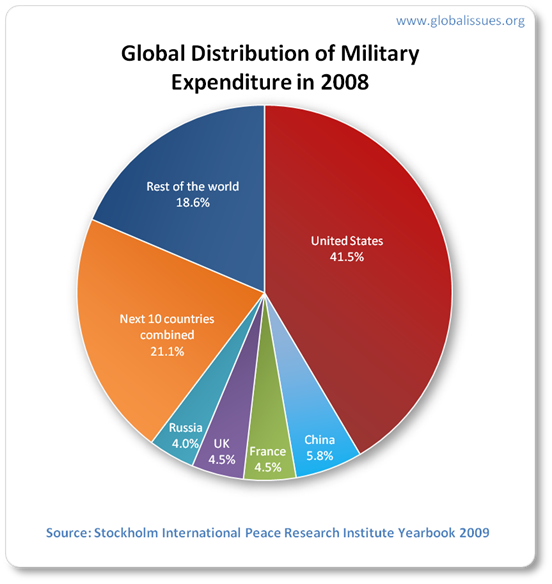
Our national debt has grown as a result of growing our military (roughly $800 billion per year), $$383 billion in interest on debt, and 1.3 trillion on medicare and social security.


This part of government growth we could call Intelligent Design -- simply doing God's will so that He/She would continue to bless us with greater abundance and allow us to be the great "exception". We would be the lantern that all other nations would turn toward, as heathens would turn to Jesus and our brand of Capitalism.

However fortunes favor those who have control of the economic supply chain and have lots of room for market growth--and that is no longer our strongest suit. We have to share the stage with burgeoning economies that are percolating in India and China and other places. Plus our balance of trade is badly out of whack as we continue to import more than we export (the trade deficit widened to $40.2 billion in December 2009 from $36.4 billion in November).

As corporate interests have paralleled government interests, one might question the incestuous nature of that relationship and wonder how government will evolve if the pattern continues. We have all borne witness to how the private sector has branded itself on public buildings and in government agencies. Imagine the world order if corporations are brokering deals between nations? Oh wait they are (See: World Trade Organization).

As both the left and right are becoming increasingly angered by the corporate and government pick-pocketing that they perceive happening, it stands to reason that there are two prime possible choices for the Government. Either Government reforms itself or Government represses dissonance. We will have to see how that "hopey changey thing" turns out. Of course, we have a lot to say about it.


Reblog this post [with Zemanta]

Tuesday, February 16

Chet Culver Needs to Get Out More

While out of state in Ohio this past weekend, I felt badly for missing Gov. Culver's visit to the Hamburg Inn for a chat with The People. Having not supported the Big Lug when he ran against Ed Fallon in the last go round, I am not particularly surprised at the way his first term has gone. When I attended the Labor Day picnic and watched him spend most of his time pitching E-85 to members of local unions, I thought, this guy really doesn't care about his audience much. And, given his insular behaviors as Governor, it should not be surprising that he is likely going to be fighting the campaign of his life, if he is to be re-elected--and this is sort of sad with the stellar group he is up against.
But, as a Democrat in a state that needs to create and save jobs, Culver has been remarkably disappointing. First, because he has bitten the hand of labor that helped elect him (though very recently threw them a bone)and, second, by a lack of creativity to use the resources he has at his disposal to improve the welfare of the state. For instance, why has the "reinvention" of state government not been a "day one" priority? Why did he call for 10% across the board cuts to agencies when some agencies are of higher priority than others (e.g., anything having to do with human services)? Why hasn't the Governor negotiated with AFSME for salary cuts in lieu of forced-retirement? And in offering incentives for retirement, why hasn't the state at least required retirees to live in Iowa for the 5 years that the state is paying their health benefits?
And I won't go into the failures on agriculture, the environment, but to say that Culver hasn't lived up to his campaign promises on these two fronts. Iowa has massive potential to feed and fuel itself, but to do it sustainably has been the trick. Monsanto and ADM have done well for themselves under Culver, but not the local family farmer or those who would grow organics. Part of this, of course, is in part because of Secretary of Agriculture, Bill Northey, but the Chief Executive of the state has a lot to say about policy.

Reblog this post [with Zemanta]

The Political Landscape: A Receding Hairline?

While glancing at the mirror the other day, I had the feeling that my hairline and the current state of American politics have a lot in common: hairy on both sides and empty down the middle. Yeah!--Huh? Follow along.

The real Left and real Right are angry and looking for leadership to help them coallesce. In the meantime, like my hair, they fire shots across the bow of each other. The central point of agreement is that it is all Obama's fault--either for not using taxes for the right things or for taxing them at all. In both cases, they are missing the point--left/right division doesn't get anything done, the Middle does. However when it comes to nominating politicians, the Left and Right know that's where they have a significant say and are actively pushing from the grassroots (or the hairline, if you will).

The Middle knows that there is something going on but, with trying to hang on to the job, the marriage, and taking the kids to assorted activities, who has time to pay a whole lot of attention? What they are paying attention to is the feeling that their lives may change--or not, depending on what happens in 2010--for reasons they don't quite get yet. They don't know for instance whether Obama is a "Radical Socialist" or if Republicans are the "Party of No," but they do worry whether they will be okay and their kids will be okay. The Tea Party Nation doesn't speak to them, but neither does Noam Chomsky.

Typically during the election cycle, the Middle does what I used to do with my hair, push it to the right or left for maximum coverage. I wonder if a real Independent Movement would be to go after the Middle, find out what it cares about and form a party around it? A real populist movement, not one formed by anger on the edges, but based on practical politics--a chicken in every pot sort of stuff. If this movement should happen, I wish it more success than my hair. But, I do know that my right and left hair-mispheres will not be coming together anytime soon.

Reblog this post [with Zemanta]

Thursday, February 4

Not Enough Canvass To Cover the Circus

Last night's gathering of interested folks at the Old Capitol Center to participate in the Project on Public Rhetoric Inquiry turned to be more inquisition than inquiry. The topic of discussion “Words Matter: On-line Postings in the Iowa City Press-Citizen” was the first of three seminars in the “Media, Space and Race” Public Rhetoric Seminar series.

Three panelists and the public were to austensibly examine an article that appeared on the Press-Citizen (“Curfew passes second reading by council 4-3”) and associated on-line commentary. No one was required to have read the article, and many, it appeared, did not.

As the panelists Jeff Charis-Carlson, Opinion Editor of the Iowa City Press-Citizen, Frank Durham, Associate Professor of Journalism, and Andre Brock, Assistant Professor of Library and Information Science framed the discussion around their unique perspectives, the commentary form the crowd was centered around the Press-Citizen's choice to allow comments on their website and the deleterious effect that has on the dialogue of human relations in our area. Some questioned the paper's policies to allow persons to post anonymously or rather pseudononymously because of the ability of those individuals to say whatever they choose (albeit within the confines of the "terms of service" of the paper which removes comments that aren't up to snuff).

Interestingly, not one person on the panel or in the audience directly commented on the curfew that the article addressed. Conversation focused on the relative merits of the Press and the commenters and bloggers. At one point a frequent blogger took umbrage at an assertion by Prof. Durham that online comments were "grafetti" and that bloggers are not held to the same standard as Journalists.

I will say that I found this part of the evening interesting. I have no problem with what the professor said as it is true that bloggers, myself included, could benefit from both a good editor and a fact-checker. Fortunately, in the blogosphere, the comments we receive from others often act in these two capacities. I know I've fixed posts when presented with new information or clearer editing eyes. I will also say that broadsides like Prof. Durham made are not likely to win any sympathy from people who do believe that the Press is elitist. I frankly appreciate facts in reporting the news that I read, even if it doesn't remove the writer or editor's bias.

I commented to the moderator that it was a good discussion because everybody's ox was gored, however I walked away with the same notion that some people have about online comments, what good was it?

Sunday, January 24

Bawking at Mid-Term Caucuses

While a relative handful of people turned out for area Iowa Republican and Democratic mid-term caucuses, many stayed home. I was among them. In the past, I waded into the Democratic Party's caucus mechanism only to become frustrated by the work as it moved away from the county and on to the district level. For instance in working on the platform committee, I watched as agendas to remove women's right to choose were attacked by more conservative members of the party. I saw union influences that pushed their agendas. In fairness, I was a party newbie and didn't really understand the not so unsubtle nuances that play out by the true believers.

However, while I did not caucus, I do understand why the faithful do. When the party is not moving in the direction you's hope they might or when new issues present themselves, it is good that there are people who will act as the canary in the coal mine and raise the issues by presenting petitions that often lead to planks in the party platform.

I applaud those who work at that level of politics and wished that more would do the same. Admittedly my stomach for it has been weakened by my experience and has strengthened my resolve to work at the local level to improve conditions. However jaded I have become, I believe that young adults should particularly dive in deep in party politics. The decisions that are made today will affect more people tomorrow than today because it takes a long time for change to be effected.

Reblog this post [with Zemanta]

Some Gitmo Detainees In For the Longer Haul

CNN reports that sources within the Obama administration are reporting that 47 detainees who are considered too dangerous to be released and unable to be tried because of national security concerns, will continue to be held.

"If you close Guantanamo but leave individuals detained without charge or trial you're just making a cosmetic change," Jameel Jaffer, director of the ACLU National Security Project, told CNN.

The Center for Constitutional Rights, which has represented several Guantanamo detainees in federal court cases, blasted the administration.

"Today was supposed to be the deadline by which President Obama would close Guantanamo. Now it will be the anniversary of the president's decision to abandon our most fundamental constitutional principles, the center said in a written statement.

Amnesty International USA chimed in with a stinging criticism.

"If the president accepts the DOJ task force recommendation to hold anyone indefinitely, this policy will not keep Americans safe; instead it will ensure that Guantanamo will continue to be al Qaeda's top recruiting tool," said Tom Parker, Amnesty's policy director for counterterrorism.

Federal officials expect to imprison the group to be held under the laws of war in a facility in the United States. If Congress approves funding, the most likely site is a prison in Thomson, Illinois.

A senior administration official cautioned against concluding that all the task force recommendations will be approved, and said numbers that have been reported may ultimately prove to be wrong.

Sources familiar with the report said the task force has recommended 35 detainees face either civilian trials or military commissions in the United States.

The remaining approximately 110 detainees - most of them from Yemen - are eligible to be transferred to their homeland or a third country once officials determine they can be held securely in their home country or a suitable third country will take them.

The recommendations of the Detainee Review Task Force were received on the date Obama set exactly a year ago as the deadline for closing the prison facility at the U.S. Navy base at Guantanamo Bay. The administration now concedes it may be many more months if not longer before the prison can be emptied.


Reblog this post [with Zemanta]

Thursday, January 21

Why Politicians Matter So Much...And So Little

Reading that John Edwards finally confessed to fathering a child with a woman he was having an affair with while his wife continues to battle terminal cancer reminds me that while not many people love politics, they do seek politicians that they can believe in. John Edwards was the fair-haired candidate when he ran as John Kerry's VP choice and was a front-runner until Obama ran him over him in Iowa.

It was difficult, as a supporter of Edwards, to comprehend the depths he would sink in chasing his political ambitions. To that end, not only did he betray his wife, Elizabeth, but he betrayed the trust of thousands of people who worked hard on his behalf. Couple this experience with many other politicians from all parties who have operated in a similar matter and you begin to understand the problem of politics--the lack of trust that politicians create with their constituents.

As we are in a time when good decisions are important and we need our best and brightest to make them, it is very important that these men and women step up and do the work. At the same time, it is important that they act like adults and not like sweaty teenagers. If we hope to have better government, we need to have better politicians.

When voters become jaded to the idea that really hard-working public officials are out there, they stay home and leave the political arena to the partisans who are not invested in solving the problems that affect the rest of us, so much as working their agendas. We need and deserve better than this.