Thursday, March 12

A Polk in the Eye for Iowa Homeowners: Foreclosure Rises

The rate of housing foreclosure filings nationally jumped dramatically in February. According to Realty Trac

Foreclosure filings — default notices, auction sale notices and bank repossessions — were reported on 290,631 U.S. properties during the month, an increase of nearly 6 percent from the previous month and an increase of nearly 30 percent from February 2008. The report also shows one in every 440 U.S. housing units received a foreclosure filing in February.

With one in every 70 housing units receiving a foreclosure filing in February, Nevada continued to document the nation’s top state foreclosure rate. Foreclosure filings were reported on 15,783 Nevada properties during the month, a 9 percent increase from the previous month and a 156 percent increase from February 2008.

Arizona posted the third highest state total in February, with 18,119 properties receiving a foreclosure filing during the month — a 23 percent increase from the previous month and an 88 percent increase from February 2008.

Nevada, Illinois, Michigan, Ohio, Texas, Georgia and Virginia also reported foreclosure totals that were among the nation’s 10 highest.

In Iowa, things are not as bleak as the national picture, but in several key counties, things could be better. Polk County has the highest foreclosure rate where 1 in every 518 housing units is in foreclosure. Rounding out the top six are:

Scott - 1 in 1192
Pottawatamie - 1 in 1276
Harrison - 1 in 1391
Clinton - 1 in 1487
Linn - 1 in 1911

Johnson County is 9th on the list with 1 in 3644 homes in foreclosure.

Wednesday, March 11

Well-Being in the Iowa 2nd Congressional District

Gallup-Healthways have put out a new survey assessing the well-being of people in the USA. The research and methodology underlying the Well-Being Index is based on the World Health Organization definition of health as "not only the absence of infirmity and disease, but also a state of physical, mental, and social well-being." Below is how Iowa's Fightin' 2nd District looks according to those nimble number crunchers at Gallup.

The Well-Being Index is comprised of over 40 questions providing an Overall Composite metric based on six individual and interrelated Domains and Indices of Well Being: Life Evaluation, Emotional Health, Physical Health, Healthy Behavior, Work Environment, and Basic Access.

Raw Score: 65.6
National Rank: 200/435
State Rank: 4/5

Life Evaluation This Index combines the evaluation of one's present life situation with one's anticipated life situation 5 years from now.

The Gallup-Healthways Well-Being Index asks Americans to evaluate their lives by imagining a "ladder" with steps numbered from 0 to 10, where "0" represents the worst possible life and "10" represents the best possible life.
Evaluation of present life situation
Anticipated life situation 5 years from now

Raw Score: 39.3
National Rank: 239/435
State Rank: 2/5

Work Quality This Index surveys workers on several factors to gauge their feelings and perceptions about their work environment. Prior large-scale meta-analyses have shown important linkages between worker engagement and several organizational performance outcomes, such as worker attendance, retention, productivity, profitability, safety, and customer ratings.

Positive work environments are characterized as those where workers express satisfaction with their work, report using their strengths in their area of work, and work in a culture of trust and partnership. Conversely, negative work environments lack satisfying work and are characterized by poor supervision.

This index is based on asking workers the following questions each day:
Are you satisfied or dissatisfied with your job or the work you do?
At work, do you get to use your strengths to do what you do best every day, or not?
Does your supervisor at work treat you more like he or she is your boss or your partner?
Does your supervisor always create an environment that is trusting and open, or not?

Raw Score: 49.6
National Rank: 281/435
State Rank: 5/5

Basic Access The Basic Access Index is based on thirteen items measuring resident's access to food, shelter, and healthcare, and a safe and satisfying place to live.
Satisfaction with community or area
Area getting better as a place to live
Clean water
Medicine
Safe place to exercise
Affordable fruits and vegetables
Feel safe walking alone at night
Enough money for food
Enough money for shelter
Enough money for healthcare
Visited a dentist recently
Have a doctor
Have health insurance

Raw Score: 85.6
National Rank: 127/435
State Rank: 4/5

Healthy Behavior The Health Behavior index includes items measuring life style habits with established relationships to health outcomes. This index is based on four key items relating to smoking, a healthy diet, and exercise.
Raw Score: 61.6
National Rank: 309/435
State Rank: 2/5

Physical Health The projected cost of American healthcare by 2017 has been estimated at over $4 trillion. At least 50% of these costs will be due to preventable disease, including diabetes, cardiovascular conditions, and strokes.

The physical health index is comprised questions related to:
Estimates of Body Mass Index
Disease burden
Sick days
Physical pain
Daily energy
History of disease
Daily health experiences

Raw Score: 78.7
National Rank: 94/435
State Rank: 1/5

Emotional Health This index is primarily a composite of respondents' daily experiences. It includes one item that probes for prior history of diagnosed depression. In the remaining items, respondents are asked to think about how they felt yesterday, from the morning until the end of the day - who they were with, what they did, and how they felt based on responses to the following nine items:
Smiling or Laughter
Being treated with respect
Enjoyment
Happiness
Worry
Sadness
Anger
Stress
Learning or doing something interesting

Raw Score: 79.0
National Rank: 201/435
State Rank: 5/5

Tuesday, March 10

Mobile Shelters for Homeless

A group in Los Angeles is tackling shelter for the homeless with a rather novel approach.

According the the group:

EDAR (Everyone Deserves A Roof) provides shelter to the homeless in an innovative cost and usage effective way. The EDAR unit is a purpose-specific, special four-wheeled enclosed device, very roughly reminding one of a covered shopping cart.

During the day, the EDAR unit is used to pursue the necessities of life. Personal belongings are secured by the use of locks. The front and back of the cart have storage baskets with removable canvas pouches. The unit is waterproof and provides protection for what it contains. EDAR's wheels are better than a supermarket cart's, being slightly larger and easier to steer in a consistent fashion. There are two brake and locking mechanisms which ensure the unit will not move on its own.

At night, the EDAR unit easily hinges out and down to Night Mode in less than 30 seconds, becoming a sleeping unit. Unfolding the unit allows it to lock in place as the flat metal base extends. The metal and wood base has a mattress and military-grade canvas cover, providing a robust tent-like shelter. The unit is flame-retardant, waterproof, windproof and helps protect from the elements. There are translucent windows that provides light and a view of the surrounding area. By re-folding the unit, the EDAR quickly returns to Day Mode.

While far from ideal in all climates, this is far more humane than no shelter at all. EDAR estimates that the cost of a bed at a shelter costs $100,000. The carts EDAR builds cost $500.

Some facts to consider:

- Each year, more than 3 million people experience homelessness in the United States, including 1.3 million children (approximately 1 in 50).
(Estimate: National Law Center on Homelessness and Poverty)

- Of 23 major US cities surveyed, an average of 23% of shelter requests by homeless people are estimated to have gone unmet.

- Of the surveyed cities, 77% of the emergency shelters estimate they will have to turn away homeless people, other than families, because of a lack of resources.
(Estimate: United States Conference of Mayors: Homeless and Hunger Survey December 2006)

Sunday, March 8

CSAs Make Sense

Because agricultural diversity is important, because locally-grown crops make good environmental sense, and because farmers don't need subsidies, but they do need reliable customers, I am becoming a believer in Community-supported Agriculture. CSA's work on a very simple premise, invest in farmers and receive "stock options"--i.e., produce, meat, eggs, bread and more.

There are some additional bonuses, you know where your food is coming from, you can choose whether it is certified organic or whether the farm uses organic and sustainable practices or not. you can be informed how your meat is raised and processed and if your eggs come from chickens that aren't pent up in cages. You can even choose to visit your food and help to grow it.

Finally, for people like me, if you have a less than green thumb, you can be assured that someone is doing it well and enjoys it.

I went to a local CSA fair today and met Kevin Powell who raises Mulefoot pigs in Strawberry Point--as a pork fancier, it was cool to learn how this type of pig, which was almost extinct is being raised in Iowa. Kevin has about 40 head of pigs on his families farm. I also met Christy from the Ecollective Farm that has happenings out on their place. I met Mark from Scattergood School that has a 30 family CSA group and Andrew from Grinnell Heritage Farm that has been in his family for 152 years.

My wife and I are likely to buy a spring share from Grinnell Heritage and a fall share from ZJ Farm in Solon. We will likely get our summer produce from Oak Hill Farms in Atalissa. The great thing is all of these deliver to the Farmer's Market so we can pick up eggs, breads, plants etc. at the same time.

CSAs are not risk free, if the growing season is lousy, farmer and partners both are affected, but the good news is that the risk is shared and thus better for all.

If you've thought about going local, check the local foods connection blog out.


Reblog this post [with Zemanta]

Friday, March 6

Whose Winning the War of Words?

This is a stretch, but here it goes. I think that the words we use give us a sense of how we see the world. This is to say that whether we are a hopeful (which has 20,620,000 Google "hits") people or a fearful (12,700,000 Google hits) people, it shows up in the words we use. Now there are serious flaws in precisely measuring the words we use, the language we speak being an obvious one. Another is the technology we use to collect "word usage." since many people do not use computers or use them only to gather information (not to write it); so it is hard to know what they are saying and thereby thinking.

These two significant limitations put aside then, we still can get a sense of what a significant subsection of the population is thinking about and, perhaps, make some glaring generalizations.

There is a liberal bias to the Web, at least there are 80,900,000 hits for "liberal" and only 59,500,000 for "conservative". Democrats and Republicans are fairly close with 42,000,000 and 37,510,000 hits respectively. Libertarians get 1,760,000 hits while Socialists receive 5,840,000 and Communists--10,400,000 hits.

But it is clear we are a conflicted people as "red states" get 168,000,000 hits and "blue states" only get 57,600,000. Among the political entertainers, Jon Stewart receives 8,430,000 hits and Rush Limbaugh 4,800,000. Fox News receives 54,100,000 hits and CBS News 116,000,000.

Thursday, March 5

Another Blow For Old King Coal

The Coal Plant in Marshalltown is dead. Despite a massive effort to "git 'r done"--the Alliant Energy plant planned for Marshalltown has been called off. According to Alliant Energy:

The decision to cancel the project is based on a combination of factors including the current economic and financial climate, increasing environmental, legislative and regulatory uncertainty regarding regulation of future greenhouse gas emissions and the terms placed on the proposed power plant by regulators.

“Our company and our partners appreciate the tremendous support demonstrated for this project by our labor partners, industry, agriculture and business leaders, the community of Marshalltown and economic development organizations across the state," says Tom Aller, president-IPL. “While our company is disappointed in this missed opportunity to further Iowa’s efforts to grow its economy and position our state as a leader in renewable energy, we will continue to focus our efforts on expanding our renewable energy resources and energy efficiency initiatives and reducing our environmental impact.


Concerted effort by environmental activists to prevent the plant from being permitted and built was largely responsible for slowing the project. "Given the fact that clean coal is still a theory and that federal legislation to limit global warming pollution from power plants is inevitable, the smart money is now on clean, renewable energy," said Marian Riggs Gelb, executive director for the Iowa Environmental Council.

In an article in the Des Moines Register, Senate majority leader Mike Gronstal says:

“Warren Buffett says Iowa has the most progressive policy in the country as it related to energy production. We've done that with both base-load capacity for coal-fired plants. We've done it with natural gas plants and we have become a world leader in wind energy. And we’ve done that all by working with those folks."

“I want to keep Iowa a world leader particularly in the area of wind energy and other renewable sources of energy,” Gronstal said. “We’re going to have discussions with those folks. They’ve made their decision and we’ll consult with them. We’ll hear they’re concerns, we’ll decide if we’re going to act.”

Bill to Have County Public Hearings for CAFOs Alive!

According to Iowa Citizens for Community Action:

Victory - HSB 186 passes out of committee!

Because of your efforts to contact key state legislators, we are getting things done and moving critical legislation forward. Yesterday afternoon, we helped pass HSB 168 out of the House Environmental Protection committee. It's an important bill that would require all counties to hold public hearings on all proposed factory farms that are large enough to require a construction permit (for hogs, that's 2,500 head in total confinement at any one time). It passed out of committee by a vote of 11-10.

Thanks for taking action! This victory happened because of your efforts to swing Representative Elesha Gayman to vote for the bill. She has been supportive, but was getting pressure to vote against it. Your calls and emails leading up to the vote helped convince her to vote in favor of it. Now HSB 168 is eligible for debate by the full House.

Foreclosed Conclusions

With the news of new programs for homeowners at the cusp of foreclosure coming to a lender near you, I took a look at the state of foreclosure in Iowa and elsewhere. With 303,419 home foreclosure filed as of December, 2008, it is good that this aid has come.

First the good news, Iowans are doing much better than most.

Iowa, which is 23rd in total population, has the 14th lowest rate of foreclosure filings. This is particularly good in the context that we have the 10th highest homeownership rate. We slip a little when the number of foreclosure filings are compared to the total number of homeowners, here we fall to 17th among all states and the District of Columbia.

If you are interested in knowing who the top and bottom five states are:

Highest Numbers of Foreclosure Filings
California: 89,449
Florida: 50,808
Arizona: 15,962
Nevada: 15,039
Michigan: 13,563

Lowest Numbers of Foreclosure Filings
Vermont: 16
Montana: 38
North Dakota: 44
South Dakota: 45
Nebraska: 46

Lowest % of Filings Per Homeowner:
Vermont
Nebraska
West Virginia
Montana
Mississippi

Highest % of Filings Per Homeowner:
Nevada
California
Florida
Arizona
Michigan

(Sources: Realty Trac December 2008, BLS estimate of state populations for 2008, Homeownership Rate by state 2007, U.S. Census Bureau. Web: www.census.gov).

I Want My Digital TV?

Thanks to Adam Burton. This is a video any person with an elderly parent who is not already a cable subscriber should watch:

The Straight Scoop on Dog Poop

On the face, this is a bizarre little topic for a progressive blog I know, but using a plastic bag and throwing dog poop in the trash is not a environmentally sound solution. Here are statistics regarding the impact of canine crap in the landfill:

• The average person in the U.S. generates about 4 pounds of solid trash per day.
• At that rate, the United States generates 210 million tons of trash per year.
• There are an estimated 44.8 million dogs in the United States.
• Dogs on average poop 23 times a week! That’s an average of 15 – 30 pounds of waste per dog per year.
• In a city of 100,000 people or 43 square miles, dogs can generate about 2 1/2 tons of feces per day. That’s almost 2 million pounds a year.
• A plastic bag can take up to 1,000 years to decompose in the landfill.

add to this that uncollected poop goes through the storm sewer system and may contaminate the water supply.

Given these facts, it makes sense to rethink doggie doo disposal. How about flushing it down the toilet (or poo down the loo)? For those of you who already do this, you are more of a genius than I. But there is still the issue of picking the stuff up.

In my quest for greener dog waste disposal, I ran across Flush Puppies. These are biodegradable disposal, flushable doggie waste bags. I'm not endorsing them, but I've ordered some to try with my two mid-sized dogs and I'll let you know how it goes.

Wednesday, March 4

What Part of "Science" Don't You Understand?

The Press-Citizen reported that more than 220 people, including 56 University of Iowa professors, have signed a faculty petition against House File 183 - The Evolution Academic Freedom Act, which was introduced this session by State Rep. Rod Roberts, R-Carroll. As you might imagine, Representative Roberts is not a scientist and, apparently, maybe not a very good lawmaker either. It does not come as a shock that he is, according to his biography "the Development Director with Christian Churches/Churches of Christ in Iowa."

Now if there is a desire to teach theological premises in schools, great--as an elective course, why not? A comparative religion course might actually be helpful to help young people to understand the beliefs of others and to better form their own beliefs. But to infuse a science curriculum with a discussion of a type of creationism that has no basis in science and must rely on faith is antithetical to the study of science.

In any case, churches are better suited to the teaching of their brand of religion and it is less confusing that way. There is a lot of good that comes from the teachings of Jesus Christ for instance, even without a basis in science. Treating people with dignity is a great idea whether it came from Christ, Mohamed, Confucius, or Pagans. So to Rep. Roberts, I say, respectfully, your beliefs and a need to produce students who have a mind for science need to be separated. People get enough mixed messages in our society.

Reblog this post [with Zemanta]

Tuesday, March 3

Farmers Market Expanding Horizons in Iowa City

In an effort to bring the variety of benefits of green-living and fresh veggies to the open air of downtown Iowa City, the Farmers Market will spread out on the streets one Saturday each month this year. This from the City of Iowa City:

Now in its 37th year, the Iowa City Farmers Market looks forward to an exciting change in 2009. One Saturday each month, beginning May 30, the Iowa City Farmers Market will move to downtown Iowa City. The Downtown Farmers Market will be located on Iowa Ave. between Clinton and Linn Streets and along Dubuque St. between Jefferson and Washington Streets. All the regular vendors will be there as well as some additional vendors from our waiting list. The special Saturday events such as Market Music and Art in the Park will continue, as well as cooking demonstrations by local chefs, Irving Weber Days on May 30 and Kids Day on September 12. This new venue for Farmers Market will provide a fun, festive environment for both its regular and new customers. It joins other successful downtown outdoor markets such as in Cedar Rapids, Des Moines and Madison, Wisconsin, which draw throngs of happy customers each market day.

The Downtown Market Days will be May 30, June 13, July 11, August 8, September 12, and October 17. Downtown Market customers will receive two hours of free (validated) parking at any of the cashiered downtown parking ramps.

The other Saturday and Wednesday markets will remain in the Chauncey Swan Parking Ramp across from City Hall between May 2 and October 31. Wednesday markets will run 5:30-7:30 p.m. and all Saturday Markets (Downtown and Chauncey Swan) will run from 7:30 a.m. to 12 noon. This is a new closing time for our Saturday markets (previously closing at 11:30 a.m.).

The vendors are all lined up and making plans for a successful 2009 Farmers Market. Make plans to join us for both the Chauncey Swan and Downtown Farmers Markets!

The Farmers Market is organized by the Iowa City Parks & Recreation Department.

The Horrors of Employee Rights

The SEIU sent this link to me. This is a humorous video--only it isn't. Watch and cringe.

Monday, March 2

Booklovers Against Homelessness

This past Saturday hundreds of Johnson County residents stopped in at the Hope United Methodist Church to buy books that support the operation of Shelter House. More than $4,800 were raised to benefit the shelter which provides social services to families and individuals who are homeless in Johnson County.

This winter more than twice the number of homeless have stayed at Shelter House or at an overflow shelter that has been run by volunteers from area churches. As the economy continues to sag, more and more people are finding themselves on the streets, renters and homeowners alike.

Currently, the Shelter House is in the midst of a capital campaign to build a 70 person shelter to replace their current facility that holds 29 people. If you are interested in making a donation toward the new shelter, please call 338-5416 or make an on-line donation at http://www.shelterhouseiowa.org/.

Need more reasons, check out 5 things you should know about homelessness. Also check out the US Conference of Mayors 2008 report "Hunger and Homelessness Survey"

A Take on the ICCSD Issues from Rod Sullivan

From Johnson County Board of Supervisor (and citizen) Rod Sullivan's Salvos reprinted with his permission:


Since I seldom let any big issues pass by without comment, it is time to discuss the ICCSD building plans. Unfortunately, I could not attend either forum on the subject. This is a very complex set of issues, so I'll try to break it up into digestible pieces.

First, whether one agrees with her or not, I applaud Mayor Bailey for expressing her concerns over the closing of Roosevelt. I find it amazing that the Press Citizen suggests that she mind her own business. It IS her business! She is a citizen! What's more, the Press Citizen is always critical of local governmental units for failures to communicate. That is exactly what happened here ­ but it is not the fault of the city!

Additionally, Iowa City has a comprehensive plan for the whole city, and it is quite good. It includes the preservation of older neighborhoods ­preservation that will be ineffective without neighborhood schools. And thePC says the City Council "should not interfere"? The PC should have instead demanded that the ICCSD go over this in a joint public meeting with the City Council.

Secondly, we should recognize closing Roosevelt is a tough call. Students and staff deserve good facilities. The building has clearly deteriorated to a critical point. There is room to build on at Horn. My problem is the school at "The Crossings". There aren't any kids there yet ­there are kids at Roosevelt. Perhaps repairing Roosevelt would be more expensive but there are very real costs to suburban sprawl. These should be discussed at length in public forums. Similarly, let's ensure that other older buildings get the maintenance they need so we do not find ourselves in this position again.

Thirdly, we need to discuss similar issues at Longfellow and Mann. I served on the Yes For Kids Steering Committee, and we sold the bond issue in part on improving accessibility at these older schools. I understand that this can be expensive. I understand that it might be cheaper tear down the older schools and to rebuild on the parking lots and/or playgrounds. But wenever said anything about closing them. Fixing, yes. Closing? It was never mentioned. Whatever the case, these neighborhoods MUST have schools, and they MUST be accessible. Anyone who understands Iowa City and the electorate knows this is non-negotiable. We already voted to do it. I personally told people the ICCSD would be fixing this! I was an honest volunteer- please do not make me a liar! As Larry the Cable Guy would say, just Git 'er done!

It has been mentioned that many kids already do not enjoy "neighborhood schools". Kids are bussed to several elementaries throughout the District. While this is true, it ignores the fact that most kids in theICCSD DO have neighborhood schools. When you factor out rural kids, who are going to be driven/bussed in any scenario, most kids live within walking distance of their elementaries. This is the way the public wants it, and experts in all sorts of disciplines agree it is generally best for the community psychologically, sociologically, and environmentally.

My final point is that we tend to assume too much. We assume that the public always wants the cheapest option, but local voters have proven that is not always the case. Voters approved the SILO tax, Conservation Bond, Library bonds in three communities, pool bonds in two communities, and much more. Voters have spoken out in favor of jail alternatives, even though they cost more. Voters have spoken out in favor of arts and culture expenditures, even though they cost more. So instead of assuming people want the cheapest option possible, we could just let people vote on it.

This is evidenced by discussions around school size. The ICCSD tells us we need elementary schools to be built for 450-550 kids in order to be as cost efficient as possible. Yet we are never told what size elementaries should be in order to maximize student performance. Almost every study of student performance shows the optimal elementary size to be 250-400. Why not ask the public if they prefer the cheapest, the best, or some hybrid?

The same discussion needs to take place at the high school level. Explain to the public that a North Liberty-north Coralville high school would only have 600-1000 students. That means fewer opportunities (not NO opportunities, but fewer opportunities) for advanced classes and extracurricular activities. It would not be the most cost effective response to overcrowding at West. But again, almost every study of student performance shows the optimal high school size to be 600-1000. Why not ask the public if they prefer the cheapest, the best, or some hybrid?

I do not envy School Board members. I know most of the ICCSD Board pretty
well. I know most of the ICCSD Administration pretty well. These are good people
we are talking about, who really care about our kids. These folks work very
hard, some as volunteers, and rarely receive the thanks they deserve. School
financing is tricky, and most of us do not fully understand it. There is no
issue more dear to the electorate than the schools. And theICCSD is faced with a
number of difficult decisions.

Lots of people have a dog in this fight. We all want to claim the moral high ground of doing what is "best for the kids." But what is best for one is not necessarily best for the next. And what is best for a single school is not necessarily best for the entire District. This is why we elect a Board­ their job is to make these decisions. I just hope the decisions are made following lots of public input.

People in the ICCSD need more details on school funding. There are staffing issues; fine. Lay out the problems so the public can opineintelligently. The more information we share, the better our decisions.

I simply hope that the ICCSD Board and Administration seeks input and then gives that input serious consideration. Do not assume that the voters in the ICCSD want the cheapest. They just might want the best.

Sunday, March 1

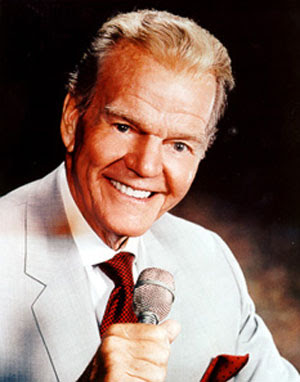
That Was Paul Harvey

It may puzzle some progressives that I have genuine sweet spot for Paul Harvey who passed away today at the age of 90. But I have good reason--he was a populist embodied in a newscaster. Born an Okie in Tulsa, he literally grew up in radio landing his first job while still in high school. From 1951 until today, he was news radio.

As a kid growing up in Dayton, Ohio and listening to the static of AM radio, there was was something special about the halting, upbeat patter that was "the voice" of Paul Harvey. Sure he could be schmaltzy and quaint, but he was never less than reassuring--professorial even. Everybody listened to PH. He had more awards and acclaim than most people will ever see. In 2005 he was awarded the Presidential Medal of Honor by George W. Bush for lifetime achievement. For my money much more appropriate than George Tenant's.

Sure he was probably more politically aligned to Mike Huckabee than Barack Obama, but he was accessible. He was more someone's slightly cranky grandfather than Rush Limbaugh's's crazy uncle. You could learn from Paul Harvey. You could learn how to be decent, caring, and present.

Even at the very end, Paul Harvey was the most listened to news personality on radio with 25 million people tuning in to hear his corn fed "News and Commentary" reports, personal anecdotes, and shameless shilling. Farmers, pimply teenagers, soccer moms waiting for the time when he'd say "Hello Americans, I'm Paul Harvey. You know what the news is, in a minute, you're going to hear ... the rest of the story." To this day, I enjoy imitating him when he would say "page two" and the most memorable tagline in the history of radio, "This is Paul Harvey. Good day."

I know we will have plenty of good days to come and yet there was something comforting in that warm cackle of a voice that so clearly enjoyed being with us as much as we looked forward to hearing it pour over us. That was Paul Harvey. Good night.


Reblog this post [with Zemanta]

Sebelius a Good Second Choice

As much as I personally wanted Gov. Howard Dean to be appointed to the Secretary of health and Human Services post, Gov. Kathleen Sebelius is a solid choice for two very good reasons. President Obama needs a nominee that won't embarass him by having some dark cloud hanging over his/her head and by all accounts Gov. Sebelius is as baggage free as they come. Secondly, she is well-liked by President Obama and has valuable experience to push his important health care agenda.

She is best known to the party faithful for the Democratic response to former President George W. Bush's last State of the Union address--which went marginally better than Gov. Bobby Jindal's and likely caused her name to fall off the list for VP candidates--nonetheless, she has been a popular Democratic governor in a state that Republican-dominated. She also brings a breadth of experience as she served as Kansas' Insurance Commissioner before she ran for Governor.

In that capacity, according to CQ Politics:

Sebelius walked the line between government regulation and a free market. “Competitive markets and solvent businesses and having people feel good about doing business in the state is not only good for industry, but for consumers, since it leads to better rates and services.”

And she also pushed to eliminate duplicate or cumbersome regulations. “What we’re trying to pull off is a balancing act between being effective protectors for the consumers of this country and not having lots of regulations and laws in place that impede the market,” she said in 2001.

In 2005, she won an $85 million increase in Medicaid dollars for the state, boosting doctors’ pay for the first time in a decade. “The payments are still low, but it certainly helped shore up the safety net system,” said Barnett.

She has called for universal health care, a major theme for Democrats during the 2008 presidential campaign. “We must commit ourselves to universal coverage, improved quality of care, and increased affordability,” she said in her Jan. 10, 2007 state of the state address. It was not enacted.

There is praise in Kansas for her bipartisan approach, a theme Obama has emphasized.

“When you’re a Democrat in Kansas, you get nothing done if you’re not bipartisan—it’s the nature of the beast,” said Neufeld.

Any Obama health overhaul plan likely will demand sacrifices from the health insurance industry, which Sebelius knows well from her time as state insurance commissioner from 1994 to 2002.

She already has fought one major battle with the health insurance industry, at the state level, conducted during her gubernatorial election campaign. In 2001, Indiana-based health insurer Anthem announced it would buy Blue Cross Blue Shield of Kansas. Unlike private, for-profit health insurers, Blue Cross Blue Shield of Kansas is owned by its state policy holders.

Though Blue Cross Blue Shield of Kansas’ members approved the sale to Anthem, Sebelius used her power as insurance commissioner to block the move, taking the fight all the way to the state supreme court, where she eventually prevailed.


As recently as last Tuesday, Sebelius signed into law a bill that reduced the Kansas budget by about $300 million to address a $6.4 billion deficit, but the legislation in large part avoided reductions in spending for health care programs, such as Medicaid. With the need for health care coverage for all increasing, Sebelius will be a position to push Obama's agenda with credibility.

Reblog this post [with Zemanta]

Friday, February 27

Howard Dean Talks Health on Hardball

Why isn't Howard Dean the next Secretary of Health and Human Services?

Agritourism: Another Vision for Iowa

According to Purdue University research, nature-/agricultural-based tourism is the fastest growing sector of the U.S. tourism industry, averaging a 30 percent increase since 1997. From farmhouse bed-and-breakfast operations to winery tours, specialized product sales and Halloween attractions, farmers are taking a chance on tourism and it is paying off.

According to the Iowa State Extension, "agritourism is a growing segment of the rural economy in many areas of Iowa." Iowa agritourism includes farm-based bed and breakfasts, Christmas tree farms, markets, fruit and vegetable u-picks, hiking for a fee, hunting/fishing for a fee, mazes for a fee, wineries and more. An issue is as this type of tourism increases, will more farms go organic in part for the safety of their visitors and for the growing demand for organic, locally-grown products?

Ethical Shopper provides some clues:

The growing interest in organic foods, local farms, and farmers’ markets has led a growing number of people to these functioning farms. "It’s grown because more farmers are finding out it’s an important avenue to bring in revenue and stay on the farm" said Rich Pirog, associate director of the Leopold Center for Sustainable Agriculture at Iowa State University. " Secondarily, it’s increasing because we’ve moved to an experience economy. People want to have a farm experience.”


As I reported in an earlier blog, small farms are growing rapidly in Iowa and agritourism may be a way for the small, family farm to stay a small, family farm.

Iowa State is sponsoring a conference on the subject on March 7th called "Visit Iowa Farms - Becoming a Destination!" the 2009 Visit Iowa Farms Conference at Honey Creek Resort at Lake Rathbun, Iowa.

Blog for Iowa has more archived from last year's event.

Thursday, February 26

This is What Democracy Looks Like-- Messy

Like about 10% of the voters who usually turnout at our local school board elections, I persevered the heat and length of this week's ICCSD board meeting to make my points about the school board's "proposed strategic facilities improvement plan" from Superintendent Lane Plugge for FAIR!, the group for which I am the Chairperson.

In so doing, I heard the concerns of parents of Rossevelt school which were largely desiring that the school receive needed repairs and improvements sooner than later. I also heard larger concerns being raised from parents at other older Iowa city schools that their schools not be under the threat of a wrecking ball.

Most importantly I heard that residents are very keen on weighing in on any district-wide plan to decide what to do about current and future school facilities and more importantly what to do to improve educational opportunity. The We Love Our Neighborhood Schools folks and others want great schools.

I also heard that the school board is working with reduced resources and that has to be factored in whatever decisions are made where growth in the district is concerned. The Catch 22 is that labor costs are the single greatest cost to schools and that the more schools there are, more labor costs follow.

Their frustration comes from the fact that the SILO money is good for buildings, but it does nothing to change the funding formula that will leave the district in a shortfall situation about the same time any new or improved school would be build. Said differently, a new school could be built without the staff to manage and teach in it.

Clearly there are some difficult days ahead as decision makers and the public try to sort through the issues that will solve school overcrowding in one part of town, upset a neighborhood's equilibrium elsewhere, and deal with changing demographics throughout the district.

Pentagon Changes Tune About War Dead Coverage

At his first prime-time news conference, President Obama said his administration would review the Pentagon policy that banned the media from taking pictures of the flag-draped coffins of U.S. troops returning from the battlefield with Defense Department officials. Apparently that review was concluded and according to CNN:

The Pentagon will lift its longtime ban on media coverage of the flag-draped coffins of war victims arriving at Dover Air Force Base in Delaware, according to a senior U.S. defense official with direct knowledge of the decision.

The coverage must be approved by the victims' families, however. Advocates of opening the base to coverage say the unmarked coffins make it impossible to identify specific remains.

Defense Secretary Robert Gates is to announce the change at a news conference at 2 p.m. ET, the senior official said. He ordered a review after President Obama asked for more information on the long-standing policy.

Though the Defense Department won't confirm it, it is widely accepted that the ban began after the December 1989 U.S. invasion of Panama, which deposed dictator Manuel Noriega.


While this is a step in improving transparency to reporting the full scope of the carnage of war to the public, it is long overdo.

Tuesday, February 24

More Farms, Less Farmland According to Ag Census

The latest National Agricultural Census Service census shows small-scale farming operations are making a comeback. The number of farms nationwide has increased 4 percent from 2.1 million farms to 2.2 million as farms have become more diverse in ownership and in offerings. At the same time however, U.S. acres used for farmland in 2007 totaled 922 million acres. This is down 16 million acres from 2002 (a 2% drop).

The NASS census shows that Iowa farms continue to expand as an agricultural state with 2,201 new farms started between 2002 to 2007. However, the total amount of acreage for farming in Iowa has declined by just under 982,000 acres, a 3% drop, since 2002.

Overall in the U.S., The number of farms reporting sales of $1,000 or less was up significantly, to 688,833 in 2007 from 570,919 in 2002, according to the count released earlier this month which may reflect the growing demand for locally produced foods. Nearly 300,000 new farms have begun operation since the last census in 2002. New farms, which make up 13% of all farms tend to be smaller, with the average size being 201 acres or less than half the size of older farms. The produce sold tends to be half the value of older farms as only 1/3 of new farm producers farm as their primary vocation. In Iowa farms with sales of less than $2,500 have grown from 23,436 in 2002 to 26,730 in 2007, an increase of 12%.

Also growing nationally are the number of farms with annual sales of $500,000 or more which now number 46,000. In Iowa, there mega-farms almost doubled between 2002-2007 with an increase of 4,714 farms (or 10% of all growth).

Falling are family and small farms with sales between $9,999 and $499,999. In Iowa, there were 63,195 farms in 2002, in 2007 there were 47,563, a decline of 25%.

The struggle between the expanding urban areas of Iowa, corporate farmers, and family operations will continue into the future as locally-grown agriculture concerns and national economic agendas faceoff in the marketplace, especially as the need for green energy is flagged as a driver for aiding the ailing economy.

Thank God for the Commie, Homo-Loving, Son's of Guns

When actor Sean Penn accepted his Oscar for his portrayal of Harvey Milk, the slain San Francisco city supervisor, he proclaimed to the audience "You commie, homo-loving sons of guns." This evoked laughter from the audience as anti-gay protesters rallied outside the Kodak Theater. He then said: "For those who saw the signs of hatred as our cars drove in tonight, I think that it is a good time for those who voted for the ban against gay marriage to sit and reflect and anticipate their great shame and the shame in their grandchildren's eyes if they continue that way of support. We've got to have equal rights for everyone."

More stirring than Penn's words were the words of the film's screenwriter Dustin Lance Black who reflected:

When I was thirteen years old, my beautiful mother and my father moved me from a conservative Mormon home in San Antonio, Texas, to California, and I heard the story of Harvey Milk. And it gave me hope. It gave me the hope to live my life. It gave me the hope to… one day I could live my life openly as who I am and then maybe, even, I could even fall in love and one day get married.

I wanna, I wanna thank my mom, who has always loved me for who I am, even when there was pressure not to. But most of all, if Harvey had not been taken from us thirty years ago, I think he'd want me to say to all of the gay and lesbian kids out there tonight who have been told that they are less than by their churches, by the government, or by their families, that you are beautiful, wonderful creatures of value and that, no matter what anyone tells you, God does love you, and that very soon, I promise you, you will have equal rights federally, across this great nation of ours.


In a country where civil rights are sacrosanct, how sad is it that two people, regardless of sexual-orientation, who choose a life together are not afforded the same rights by federal and state law. Fortunately justice speaks in a voice more eloquent than ignorance and, in Black's words "very soon, I promise you, you will have equal rights federally, across this great nation of ours" and we all will be the better for it.

Monday, February 23

Things Are Looking Bad or Are They?

In my counseling training program years ago, I learned that what people believe is more important, from a therapeutic perspective, than what they know factually. This is to say that what a person thinks is more important than what is true. So that brings me to today's CNN poll that says that almost 75% of Americans are somewhat or very scared about the way things are going in the U.S.

I would argue that this kind of national malaise is a case of self-fulfilling prophecy--kind of like Chicken Little saying "the sky is falling" and lo, the sky falls, and falls, and falls some more. What this might say is we don't have any confidence in ourselves and our ability to solve our own economic problems or maybe it is deeper than that--we want other people to fix things for us and don't have any confidence they can.

Either way, this thinking leads us to where it is darkest before it goes completely black.

So what to do? Acknowledge that we are in a hole and stop digging deeper:

1) We need to unplug ourselves from those folks who insist on telling us how to think and think for ourselves (I'm not telling you how to think--just offering a suggestion). Investors rely too much on advice from others rather than their own judgment. Maybe if folks ignored some of the "expert" adivse they are getting, the economy would actually turn around faster.

2) We need to invest in our country. Crazy notion, but buying savings bonds might actually be the sanest way to make sure your life savings don't compleely evaporate because other folks are panicking.

3) Support your community, taking a sort of "think global, act local" approach. It may be healthier to support those people around you who are struggling just the same as you are. We might not be able to take care of the whole world, but we sure can take care of our blocks, neighborhoods, and schools.

4) Learn from our own history, unlike the Great Depression, we don't have a Dust Bowl to contend with, so our green economy that feeds us and supplies us resources to deal with other problems is in good shape.

5) A good question to ask yourself when you are worried about things is "How is my life different today than it was yesterday?" If you find yourself saying, it is no worse than the day before, perhaps your angst is not called for.

6) Lastly, if you think things are bad, really bad, challenge yourself to identify 10 things that are going okay. For instance, when I was laid off last summer, I took great comfort in the fact I had a house, a great partner, the best dogs in the world, good friends, a guitar, a car that ran, feet that work if the car didn't, and so on.

In the mean time, let's try to have some faith in our fellow humankind, not give in to gloom and doom, and conserve our energies to fight the really important fights that are likely to lie ahead. Who knows, maybe the one-hit wonders Timbuk 3 were actually right.

Friday, February 20

Locally-Grown Growers Growing

According to the Cedar Rapids Gazette:

The number of small Iowa farms selling directly to consumers increased to 2,987 in the 2007 count, up from 2,455 in the last Census of Agriculture in 2002.

Farms harvesting vegetables for sale climbed 17.2 percent over the five-year period, to 881.

The number of farms with fruit trees, nuts and berries increased 78 percent to 735. They generated $7.4 million in sales, up from $4.5 million in 2002.

But the biggest gain in local produce was in grape production. The number of growers increased more than twofold, from 133 to 335. Grape acreage increased more than fourfold to 797 acres.

“The census illustrates the increased interest statewide in locally grown produce,” Iowa Secretary of Agriculture Bill Northey said in a prepared statement. He praised specialty crops, saying they help farmers diversify their production while diversifying the state economy. Northey said growth in the state’s wine industry helped boost Iowa’s agricultural tourism, which grew more than threefold to $12.7 million.

Nursery, greenhouse, floral and sod operations also grew at a strong pace, with sales climbing from $77.6 million to $93.8 million. The amount of growing space protected from the elements in hothouses or greenhouses grew to 7.3 million square feet from just more than 5 million square feet.

The number of farms growing greenhouse vegetables and fresh-cut herbs more than doubled, to 106, reaching over $7.5 million in sales. Ninety Iowa greenhouses grew tomatoes, generating almost $1.7 million in sales.

Roosevelt Parents Fighting for IMBY

We all have heard about NIMBY-ism, the "Not in my back yard" attitude that prevails when neighborhoods are threatened by change, but the latest "draft" action by the Iowa City Community School District pertaining to area school facilities has some parents in Iowa City fighting for their neighborhood. The plan calls for the closing of the current Roosevelt school and building a larger one in the Crossing neighborhood which would cause parents in the Roosevelt area to bus their children and remove a central meeting place for the community. Lori Enloe and other parents in the Roosevelt school area are fighting to keep their neighborhood school in their backyard. For them it is an effort to improve the school rather than replace it elsewhere.

The School District sees this as a strategic move to lessen the overcrowding in some west side elementary schools and as a way to support student learning as "research shows without doubt that concentrated poverty and ethnicity make it more difficult to reduce and eliminate achievement gaps. These factors will play an important role in determining district facility decisions."


Weighing in on their behalf are parents in other older neighborhoods who fear their schools could suffer a similar fate and the city's mayor who has grave concerns about the sustainability of neighborhoods if neighborhood schools go the way of the dodo. In a memo to fellow city council members, Bailey says "This would have a
devastating effect on these neighborhoods and the City goals to encourage reinvestment in residential properties in the Central District and to achieve a healthy balance of rental and owner-occupied housing in the district older neighborhoods."

Additionally, groups like the Sierra Club, FAIR! and others are studying the issues of the strategic facilities plan from an environmental and economic justice standpoint. One particular point of controversy is whether the research cited by the school district is accurate. For instance lower achievement is tied by research to quality of school facilities, quality of instruction, and student support systems. Causality based on race or SES is often cited because it is easy to correlate, more so than qualitative measures.

The Iowa City Community School Board meets next Tuesday (2/24) at 7 pm at the district office on Dubuque St. It is likely that a large number of people will want to speak during the public discussion period. The School District is also planning public meetings on March 2 at 7 pm at West High School and March 7 at Northwest Junior High at 10 am.

Reblog this post [with Zemanta]

Thursday, February 19

An Evening of Hot Air That's Cool

From Andrew Snow at Iowa Global Warming Campaign:

Attend An Iowa Activist Evening next Monday night, Feb. 23rd. A group of informed members from a number of organizations will be gathering to discuss topics including the Marshalltown coal plant, federal energy legislation and passenger rail service from Chicago to Des Moines. Then we will be taking action to make sure our leaders know we want clean, renewable energy, better transportation options and policies that reduce harmful global warming pollution. Finally, there will be a screening of the film Fighting Goliath, a short film about the fight over coal power in Texas. Food and film snacks will be provided.


Seating is limited, so in order to reserve your spot we are asking you RSVP either by responding to this email or calling our offices at: (515) 244-3113. We hope you can come.


There is also another opportunity for you to get involved. Right now, the state legislature is beginning debate on energy efficiency measures - the easiest way to reduce greenhouse gases while saving money and creating jobs. They need to hear your voice!

Why Does Eric Holder Hate Us?

US Attorney General Eric Holder took a bold step in a speech he made to the Justice Department for Black History Month. He said "this nation has proudly thought of itself as an ethnic melting pot, in things racial we have always been and continue to be, in too many ways, essentially a nation of cowards." Us cowards? Americans, cowards? How can he say that?

He continued on to say "Though race related issues continue to occupy a significant portion of our political discussion, and though there remain many unresolved racial issues in this nation, we, average Americans, simply do not talk enough with each other about race. It is an issue we have never been at ease with and given our nation’s history this is in some ways understandable. And yet, if we are to make progress in this area we must feel comfortable enough with one another, and tolerant enough of each other, to have frank conversations about the racial matters that continue to divide us."

Come on, I mean in 2009 who doesn't know someone who comes from a diverse background that they hang with? Why just the other day, I was talking to my black friend Jamal about race. I said, "Can you believe how racist some people are?" Jamal said, "Yes, that's why I'm glad we are so tight." We fistbumped and I got off the bus in my neighborhood while Jamal continued on to his.

But back to Holder's statement, "As a nation we have done a pretty good job in melding the races in the workplace. We work with one another, lunch together and, when the event is at the workplace during work hours or shortly thereafter, we socialize with one another fairly well, irrespective of race. And yet even this interaction operates within certain limitations. We know, by "American instinct" and by learned behavior, that certain subjects are off limits and that to explore them risks, at best embarrassment, and, at worst, the questioning of one’s character. And outside the workplace the situation is even more bleak in that there is almost no significant interaction between us. On Saturdays and Sundays America in the year 2009 does not, in some ways, differ significantly from the country that existed some fifty years ago."

What does he mean. When I went to see "The Reader" last Saturday, there were all kinds of people in the theater. There were older people and younger people, and men and women. In fact, I think I saw an African-American couple in the audience. In fact when I was at the restaurant after the movie, they were there too. I think it was the same couple.

And at church this Sunday, I was talking to a couple that were visiting the church about a discussion on race relations we are planning. Even though we are living in post-racial America, there are a few stragglers we are trying to reach. It was an inter-racial couple. They said they'd think about coming.

Anyway, and with respect, Eric Holder is way off the mark. Listen to this: "As a nation we should use Black History month as a means to deal with this continuing problem. By creating what will admittedly be, at first, artificial opportunities to engage one another we can hasten the day when the dream of individual, character based, acceptance can actually be realized. To respect one another we must have a basic understanding of one another. And so we should use events such as this to not only learn more about the facts of black history but also to learn more about each other. This will be, at first, a process that is both awkward and painful but the rewards are potentially great. The alternative is to allow to continue the polite, restrained mixing that now passes as meaningful interaction but that accomplishes little."

Can you imagine some old school "gangstas" and folks from suburbia sitting down and talking like that--yeah, that'd be just a little tense. But seriously, most of the black people I know are just like white people I know. They want good schools for their kids, a good job, a nice place to live. I don't think they are into the whole "race as definition of self" thing any more.

I think the new AG is a well-meaning guy, but, you know, I think we've all got a handle on things--especially since we elected Obama, right?

Lefties for Obama!

Okay, this is a cheap way to have people take a look at this video, but as a right-handed person growing up in a left-handed household, this resonates.

Tuesday, February 17

Nuclear Loses, Green Wins in Stimulus Final Package

According to 1 SKY:

Amidst tight votes in the Senate (61 supporters, including 3 swing Republicans), $50 billion in public loans for nuclear power was removed from the bill during conference between House and Senate versions. The conference strengthened the bill in other ways as well, producing an extensive lineup of unprecedented investments in clean energy and other green initiatives.

Total: $68 billion in direct green investments, plus another $20 billion in clean energy tax incentives -- enough to create over 1.5 million green-collar jobs.

Highlights include:

Over $16 billion for public transit, including $8 billion for inter-city high speed rail;

$9.5 billion for targeted low-income weatherization projects, and tens of billions for efficiency investments linked to other projects in the bill;

$11 billion for a smart grid;

$0 (as in nothing) for new nuclear power plants;

Full funding for the much-needed Green Jobs Act;

Expanded tax credits for wind, other renewables, and plug-in hybrids (Obama's goal is to have 1 million of these on the road by 2015);

"Decoupling": This measure ensures that utilities are encouraged to invest in energy efficiency in the same way that they are encouraged to invest in new power capacity. This will spur private efficiency investments, create new jobs, save consumers money, and lessen our reliance on dirty energy.

Analysis from friends at Greenpeace found that these pollution-cutting investments and policies will be equivalent to taking 13 million cars off the road if implemented properly.

Unfortunately, some funding went to coal research and new highway construction, but that pot of money was generally dwarfed by investment in efficiency, renewables, and public transportation. Most of the dirty energy handouts and loopholes were removed at the last minute.

Friday, February 13

Climate For Change

Below is a message from I'M Iowa's Ed and Lynn Fallon. Hat's off to them, Physician's for Social Responsibility (Micki McCue) and others for their leadership on this (this means you, Mike Carberry).

Dear Friends,

We heard a cardinal sing on February 1st, heralding the first sign of spring in our neighborhood. Five days later, daffodils pushed through the thawing soil about a mile from our home. The Des Moines River has been ice-free for a week, and the ice on the Raccoon River is on the verge of breaking.

On February 2nd, Punxsutawney Phil announced (through interpreters, of course) that America should expect six more weeks of winter. Here in Des Moines, after signs of an early spring and eight days with high temperatures ranging from 42 to 62 degrees, some have called into question our most famous groundhog’s credibility.

Face it: America needs a new groundhog. More to the point, we need new mechanisms for assessing and understanding what is happening to our climate and, as a result, our planet and our civilization.

To be clear, isolated warm-weather “events,” such as the ones we note above, cannot be cited as evidenc e of climate change. Conversely, neither does unseasonably cool weather dismiss climate change. We have to look at the big picture, the global picture. Despite what some skeptics say, the consensus is in. Global climate change is a reality. How we monitor it and, more important, how we respond to it, will determine the viability of our future.

Across the globe, a new generation of climate-change groundhogs is rising to the challenge. One website that’s been very helpful to us is http://www.realclimate.org/. Another is http://www.idealbite.com/.

In Iowa, two activities over the next week can help educate us about climate change. The first is this weekend in Iowa City, sponsored by Physicians for Social Responsibility. The second is Monday in Des Moines, where experts will summarize the work of the Iowa Climate Change Advisory Council. See below for details.

We hope you can attend one or both of these events, and please spread the word. Thanks.

Ed & Lynn Fallon

February 13 & 14 – Power-lines to the Future

A conference organized by Physicians for Social Responsibility at the
International Center, Old Capitol Town Center Mall, Iowa City. PSR hopes to encourage Iowans, especially those involved in the health professions, to become more informed and actively engaged in confronting the gravest health challenges of our time. For more information, visit www.iowa-psr.org/pl/pl_home.html.

February 16 – Iowa Climate Change Briefing and Discussion

Sponsored by about twenty organizations and agencies, this meeting will present the highlights of the Iowa Climate Change Advisory Council’s recent report. It’s at the State Historical Building, 600 E. Locust, Des Moines, from 6:00 – 7:30 p.m. Contact Senator Joe Bolkcom at joe-bolkcom@uiowa.edu or (319) 353-2681.

Thursday, February 12

You Say You Want an Evolution?

Happy Anniversary all you Survival-of-the-Fittest-lovers--Darwin would have been 200 today if he hadn't been done in by his evolutionary limitations or been smoted (depending on who you ask). In Iowa, proponents of Darwinism and Creationism continue to go after each other hammer and tong, and why not? What good is scientific fact about man's rise from the primordial ooze when God doing it in a day is so much more believable?

But because nothing is "certain" where the origins of man are concerned, states are passing "academic freedom" laws. Arguments over evolution are not took place at the local school board level, but Such laws elect to legislate support for teachers who discuss the scientific strengths and weaknesses of issues such as evolution ostensibly to protect freedom of speech of instructors and students, rather than get into the "he said/Thee said" that evolution and Intelligent Design proponents wrangle over. Such a bill passed in Louisiana last year.

Currently Iowa is in the company of Oklahoma, Alabama,and New Mexico as states that have this type of legislation in the mill. Will these bills pass? In the wake of the Louisiana result last year, similar bills were debated in Florida, Michigan, Missouri, and South Carolina. All failed.

This change in focus is of concern to those in the science and teaching professions: As Robert Gropp, director of public policy for the American Institute of Biological Sciences in Washington is quoted in the Christian Science Monitor, "Quite honestly, there aren't any strengths and weaknesses to evolution in the way they say. It's the hook they use to introduce nonscientific explanations. You have to give [evolution opponents] credit: They've gotten crafty about arguments they make. 'Academic freedom' sounds very all-American, but the problem is it sets aside the way science is done, the way we teach science."

I don't think that school teachers should be put in a position to have to provide instruction on a subject that is not in their expertise. A science teacher has the expertise to teach science. Similarly, I would expect that evolution wouldn't be taught by theologians.

In any case, Happy Birthday Charles Darwin and God bless you.

You've Got to Spend Money to Make Money?

The old adage "you've got to spend money to make money" is being put to the supreme test by the likely passage of a $790 billion stimulus/keep people afloat package that the House, Senate and Obama team are hammering out. Like anything done by committee, it has a little bit of everything in it for just about everyone, after all politics is the art of the possible.

The analogy I use is that our leaders are like an interstate truck driver who is wearing a blindfold; not knowing what is in front of him, the driver will steer straight ahead because turning the wheel either way is likely to have immediate dire consequences. Nonetheless, in the longer run, holding the wheel straight will cause him to miss his exit or drive off the road if the road curves. The only other option for him is to turn the wheel based on his instincts, the feel of the road, and other experiences and hope they guide him correctly. Given that we only know where we have been and don't really know where we are going, the best we can do is make the best of three possibly unpleasant options.

Here's what the bill offers:

For the People
• Most individuals and couples will get a $400 to $800 tax credit.
• The bill introduces the American Opportunity Tax Credit, a $2,500 credit for higher education expenses. It also increases the maximum Pell Grant by $281 in the 2009-10 academic year and by $400 in the 2010-11 academic year.
• First-time home buyers may qualify for a tax credit of up to $8,000. The bill doubles the size of an existing temporary home buyer credit to $15,000, allow all home buyers to claim it, and removes the requirement that the credit be paid back.
• People who receive Social Security will get a one-time payment of $250.
• For seniors who don't work, as well as disabled veterans and retired railroad workers, the bill provides a one-time $300 payment.
• The bill provides a $500 credit per worker and a $1,000 credit per dual-earner couple paid to people making $70,000 or less ($140,000 per dual-earner couple).
• The bill includes a one-year provision to protect middle- and upper-middle-income families from having to pay the Alternative Minimum Tax.
• Increases eligibility for the child tax credit by lowering the income threshold to $8,100.
• Jobless workers provided an additional 20 weeks in unemployment benefits, and 13 weeks on top of that if they live in one of the 30 high unemployment states. Weekly unemployment benefits will temporarily increase by $25 and the first $2,400 of benefits in 2009 would be exempt from federal income taxes.
• Food stamp payments would increase by 12%, so a family of four would see an additional $71 on top of the $588 per month they receive currently.
• $5 billion to weatherize modest-income homes.

For Business
• $7 billion for expanding high-speed Internet access.
• $11 billion for building a so-called smart grid power network.
• $20 billion for digitizing health records.
• $27 billion on highways.
• $8.4 billion on public transit.
• $5 billion to extend a provision allowing businesses buying equipment such as computers to speed up its depreciation through 2009.
• $2.5 billion to makes sales tax on paid on new car purchases tax deductible.
• About $50 billion for energy programs, focused chiefly on efficiency and renewable energy, including $6.4 billion to clean up nuclear-weapon production sites; and $13.9 billion to subsidize loans for renewable energy projects.

For Government Work Projects and State Budget Relief
• $2.3 billion to create a contingency fund through 2010 for the welfare program called Temporary Assistance for Needy Families, which provides cash assistance to the needy.
• Incentive for states to provide unemployment insurance coverage for part-time workers and for workers who quit their jobs for compelling family reasons.
• $8 billion in aid to states to defray budget cuts.
• $4 billion in grants to state and local law enforcement to hire officers and purchase equipment.
• $2.8 billion for homeland security programs, including $1 billion for airport screening equipment.
• $4.5 billion to make federal buildings more energy efficient.
• $6.3 billion in state energy efficiency and clean energy grant.

(Sources: CNN, NY Times, AP, Reuters, Bloomberg News)

Wednesday, February 11

Stimulus Bill Is the Bomb

From the Peace Team:

We've heard President Obama on the TV alot talking about how he's promoting wind and solar power in the new stimulus bill. But in the Senate version of the bill, it's all a great, big, honking FRAUD, because the 50 billion in loan guarantees for "eligible technologies" there has been deceptively defined so that most of that money will instead go to finance nuclear and filthy coal power plants instead.

We know this because Republican Senator Bennett from Utah made sure that was the intent when he snuck this provision into the bill in the Appropriations Committee. Why it is still there after Bennett himself voted against the whole package is an outrage. But because the House bill lacks this garbage provision, we still have a chance to remove it in the reconciliation between the Senate and house versions.

And if that weren't bad enough, there is another billion for new nuclear weapons development. That's not the kind of infrastructure we were promised.

Because of the urgency of this action, please call your members of Congress toll-free at 800-828-0498 or 800-459-1887 to raise an immediate fuss about this. Then submit the action page below as well as a follow up.

No Nuclear/Coal Subsidies In Stimulus Bill:
http://www.peaceteam.net/action/pnum934.php
What a cruel and dishonest trick on the American people if this is all allowed to pass, to foist the sludge spill disasters of the future on us, in the sheep's clothing of a green energy spirit, which is what we thought we were all voting for in the last election.

All they've talked about for years is how vulnerable nuclear power plants would be to a possible terrorist attack, and now they want to build many more?? And this is on top to the fact we have nowhere to put all the dangerous nuclear waste existing plants have already generated. This is not the change we were promised and it's time to make that abundantly clear with our phone calls and emails. Please make your toll-free calls and submit the action page above.

Tuesday, February 10

Obama Press Conference: Refreshing Differences

After the Bush years of obfuscation, a unusually somber President Obama should receive high marks for relative candor and a high degree of control in his first televised national press conference. Faced with a financial crisis with a second bailout and stimulus package up in the air, Obama made his case to the American public while deftly addressing questions put to him by the press.

For example:

Chip Reid: You have often said that bipartisanship is extraordinarily important, overall and in this stimulus package, but now, when we ask your advisers about the lack of bipartisanship so far -- zero votes in the House, three in the Senate -- they say, "Well, it's not the number of votes that matters; it's the number of jobs that will be created."

Is that a sign that you are moving away -- your White House is moving away from this emphasis on bipartisanship?

And what went wrong? Did you underestimate how hard it would be to change the way Washington works?

Obama: Well, I don't think -- I don't think I underestimated it. I don't think the -- the American people underestimated it. They understand that there have been a lot of bad habits built up here in Washington, and it's going to take time to break down some of those bad habits.

You know, when I made a series of overtures to the Republicans, going over to meet with both Republican caucuses, you know, putting three Republicans in my cabinet -- something that is unprecedented -- making sure that they were invited here to the White House to talk about the economic recovery plan, all those were not designed simply to get some short-term votes. They were designed to try to build up some trust over time.

And I think that, as I continue to make these overtures, over time, hopefully that will be reciprocated.

But understand the bottom line that I've got right now, which is what's happening to the people of Elkhart and what's happening across the country. I can't afford to see Congress play the usual political games. What we have to do right now is deliver for the American people.

So my bottom line when it comes to the recovery package is: Send me a bill that creates or saves 4 million jobs. Because everybody has to be possessed with a sense of urgency about putting people back to work, making sure that folks are staying in their homes, that they can send their kids to college.

That doesn't negate the continuing efforts that I'm going to make to listen and engage with my Republican colleagues. And hopefully the tone that I've taken, which has been consistently civil and respectful, will pay some dividends over the long term. There are going to be areas where we disagree, and there are going to be areas where we agree.

As I said, the one concern I've got on the stimulus package, in terms of the debate and listening to some of what's been said in Congress, is that there seems to be a set of folks who -- I don't doubt their sincerity -- who just believe that we should do nothing.

Now, if that's their opening position or their closing position in negotiations, then we're probably not going to make much progress, because I don't think that's economically sound and I don't think what -- that's what the American people expect, is for us to stand by and do nothing.

While not always answering questions head on, like in the case of whether he would reverse the policy about allowing the photographing of the draped coffins of soldiers returning to Dover AFB, he did say what criteria he would use to make his decision.

Perhaps one of his best and worst moments was in addressing the grand lady of the press, Helen Thomas, for the first time as President when he smiled and said "All right. Helen? This is my inaugural moment here. I'm really excited." Thomas, who was relegated to the bullpen during the Bush administration, didn't give him a pass in asking him "Mr. President, do you think that Pakistan and -- are maintaining the safe havens in Afghanistan for these so-called terrorists? And, also, do you know of any country in the Middle East that has nuclear weapons?"

His response was somewhat evasive when it came to the second part of her question as he said " With respect to nuclear weapons, you know, I don't want to speculate. What I know is this: that if we see a nuclear arms race in a region as volatile as the Middle East, everybody will be in danger.

And one of my goals is to prevent nuclear proliferation generally. I think that it's important for the United States, in concert with Russia, to lead the way on this.

And, you know, I've mentioned this in conversations with the Russian president, Mr. [Dmitry] Medvedev, to let him know that it is important for us to restart the -- the conversations about how we can start reducing our nuclear arsenals in an effective way so that we then have the standing to go to other countries and start stitching back together the nonproliferation treaties that, frankly, have been weakened over the last several years. OK." Then he cut her off on her follow-up.

On the whole, the President did what he set out to do, to discuss the stimulus package and reassure Americans that he was working for them.

Reblog this post [with Zemanta]

Wednesday, February 4

Clean Water Infrastructure Is Good Infrastructure

Anyone who mucked about in the floodwaters of last spring should have no trouble grasping the sad state of affairs that our waterways in Iowa are in. Our representatives in Washington should be supportive of efforts from groups like the Iowa Environmental Council who are front and center on this issue. The IEC has the following to say with respect to the stimulus bill working its way through the US Senate.

The Iowa Environmental Council is encouraging U.S. lawmakers to increase clean water infrastructure funding in the economic stimulus plan, now under consideration in Congress. The House version of the stimulus package currently includes $8 billion and the Senate bill $4 billion for clean water infrastructure. The EPA estimated the cost of meeting our clean water infrastructure needs at $580 billion during the last assessment in 2004, according to a GAO report.

In Iowa alone, the Department of Natural Resources estimates water infrastructure needs to be over $618 million over the next two to three years.

According to Susan Heathcote, water program director for the Iowa Environmental Council, 87 of these projects, with a total cost of $306 million, could be underway in three to four months if the necessary funding were made available.

Sixty-six communities in Iowa do not have a public sewer system and 21 communities need help to upgrade their drinking water systems says Heathcote.

"These needs combined with the fact that we could have shovels in the ground as soon as funding becomes available make them perfect candidates for funding under the nation's economic stimulus package," said Heathcote.

In letters to Iowa Representative Boswell and Senators Harkin and Grassley, Heathcote outlined Iowa projects that could proceed immediately with available funding:

- 25 communities with sewage treatment plant projects, with estimated needed loan amounts of $165 million;

- 41 small unsewered communities, with estimated total cost of $72 million.

- 21 communities with need for upgrades to their drinking water systems, with an estimated total cost of $69 million.

Heathcote says, in addition to the new water projects outlined above, Iowa communities also need help to address ongoing efforts to separate outdated combined sewer systems and to repair or replace aging sanitary sewer system pipes. Until this work is completed, Iowa communities must continue to deal with the public health threat from frequent failure of sanitary sewer systems that result in discharges of untreated sewage into Iowa rivers.

"While we are addressing our ailing economy, why not make a real investment in clean water?" said Heathcote.

Two kinds of Energy Vampires

Well, you knew it had to happen. The Senate part of the stimulus bill is outfitted with $50 billion dollars by the vampires in the coal industry so that it can create coal liquification plants which are actually more energy inefficient and much larger contributors to global climate change than petroleum refiners. Andrew Hug over at Environment Iowa needs everyone to act to let our Senators Grassley and Harkin to know that we don't want it.

Then, on the homefront, we all have our (silver) crosses to bear with our own energy consumption. Take a gander at this short video from Good magazine , it is eye-opening.

Tuesday, February 3

America, the Beautifully Confused Place

"America the Beautiful" has gotten a lot of airplay in the last couple of weeks with a dazzling Aretha Franklin singing it at President Obama's Inaugural and Faith Hill belting it out for the crowd at the Super Bowl the other day. It has been suggested that it should replace "The Star Spangled Banner" as our national anthem and is sometimes called the unofficial national anthem. And just like our country, there is a lot going on behind the scenes.

I learned the poem "America the Beautiful" (which was converted into our "second" national anthem by common folks borrowing a popular tune that preceded it by 13 years called "Materna" by Samuel A. Ward) was written in 1895 by Katharine Lee Bates, an English instructor at Wellesley College who was moved by a trip she took to Colorado's Pike's Peak by way of the Columbian Exposition (aka "The World's Fair" in Chicago). The poem originally appeared in the newspaper the Congregationalist to commemorate Independence Day and became popularized by being sung to as many as 74 different folk tunes including "Auld Lang Syne."

Bates herself told a newspaper reporter that the song's success— "so accidental and so simple"—was due to the people, not to herself. As for the poem, "I have come to see that I was its scribe," she said firmly, "rather than its author."

There are many incongruities in American life, and this poem and its writer represent a couple of them. First, the words to "America the Beautiful."

O beautiful for spacious skies,
For amber waves of grain,
For purple mountain majesties
Above the fruited plain!
America! America!
God shed his grace on thee
And crown thy good with brotherhood
From sea to shining sea!

O beautiful for pilgrim feet
Whose stern impassioned stress
A thoroughfare of freedom beat
Across the wilderness!
America! America!
God mend thine every flaw,
Confirm thy soul in self-control,
Thy liberty in law!

O beautiful for heroes proved
In liberating strife.
Who more than self their country loved
And mercy more than life!
America! America!
May God thy gold refine
Till all success be nobleness
And every gain divine!

O beautiful for patriot dream
That sees beyond the years
Thine alabaster cities gleam
Undimmed by human tears!
America! America!
God shed his grace on thee
And crown thy good with brotherhood
From sea to shining sea!

O beautiful for halcyon skies,
For amber waves of grain,
For purple mountain majesties
Above the enameled plain!
America! America!
God shed his grace on thee
Till souls wax fair as earth and air
And music-hearted sea!

O beautiful for pilgrims feet,
Whose stem impassioned stress
A thoroughfare for freedom beat
Across the wilderness!
America! America!
God shed his grace on thee
Till paths be wrought through
wilds of thought
By pilgrim foot and knee!

O beautiful for glory-tale
Of liberating strife
When once and twice,
for man's avail
Men lavished precious life!
America! America!
God shed his grace on thee
Till selfish gain no longer stain
The banner of the free!

O beautiful for patriot dream
That sees beyond the years
Thine alabaster cities gleam
Undimmed by human tears!
America! America!
God shed his grace on thee
Till nobler men keep once again
Thy whiter jubilee!

For me a couple lines jump out

"Till selfish gain no longer stain
The banner of the free!" and

"Thine alabaster cities gleam
Undimmed by human tears!
America! America!
God shed his grace on thee
Till nobler men keep once again
Thy whiter jubilee!"

As the daughter of a Congregationalist minister, she was no doubt influenced by the teachings against "ill-gotten gain," though she would probably be called a Secular Humanist herself. These words suggest that it was her hope that the American way would be less about commerce and more about all Americans sharing of the natural wealth. The "alabaster city" is a reference to the buildings of the Chicago World's Fair's White City (the majority of which are gone today). Beyond this, her words were decrying the fascination with industrial developments and crass commercialization that were going on. This song, which is revered by so many for its patriotic undertones is a pretty radical call for reform.

This isn't so surprising when you take into account the causes that Bates supported. She was involved in a few social reform activities, working for labor reform and planning the College Settlements Association with Vida Scudder. Bates was an active member of numerous and wide ranging humanitarian, academic, and political organizations, including the American Association for Labor Legislation, the Antivivisection Society, the League of Nations and the American Poetry Society.

Katharine Lee Bates lived for twenty-five years with Katharine Coman in a committed partnership that has sometimes been described as a "romantic friendship." Bates wrote, after Coman died, "So much of me died with Katharine Coman that I'm sometimes not quite sure whether I'm alive or not." As Rev. Barbara Hamilton-Holway at a Unitarian Universalist Church in Santa Barbara pointed out, "Bates who wrote America the Beautiful, loved a woman, was denied full rights as a citizen, and still saw beauty and hope to praise in this country. Bates died at home in Wellesley at the age of seventy nine years after the US Constitution afforded women the right to vote. In Massachusetts, a dormitory at Wellesley College, a public school, and a street bear her name. There is also a life-size bronze statue of her on the grounds of the Falmouth Public Library.

Reblog this post [with Zemanta]